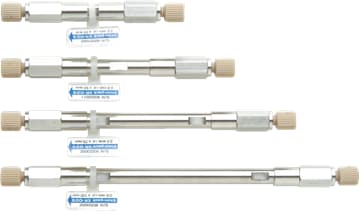
Shim-pack XR Series


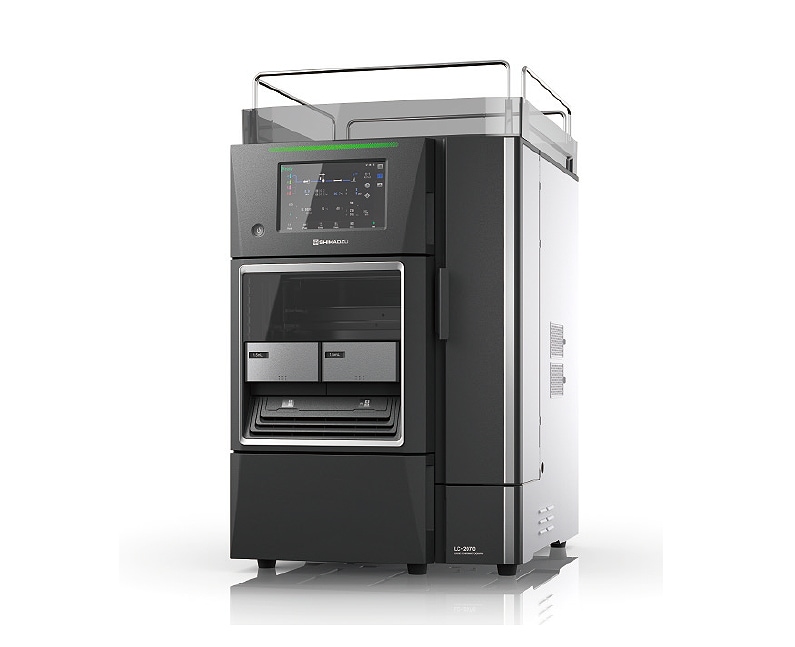
Most amino acids, except for some of the aromatic amino acids, only have ultraviolet (UV) absorption at short wavelength(200 nm – 210 nm). In general, there are two methods to analyze amino acids with HPLC. One is called pre-column derivatization method that derivatize amino acids before column. The other is called post-column derivatization method that derivatize amino acids after column. Pre-column derivatization method is widely used because it can be easily transferred to UHPLC analysis using reversed phase columns. Furthermore, there are two main methods of detecting derivatized amino acids: UV detection and fluorescence detection. Since fluorescence detection directly detects the light energy emitted from fluorescent substances, it is highly selective and sensitive. This article introduces an analysis of amino acids with pre- column derivatization method using a UV detector, comparison of sensitivity between UV detection and fluorescence detection, and the effects of sample solvents in pre-column derivatization of amino acid. Pre-column derivatization was performed automatically using the co-injection function of the integrated HPLC system i-Series introduced in L529B.
April 5, 2022 GMT