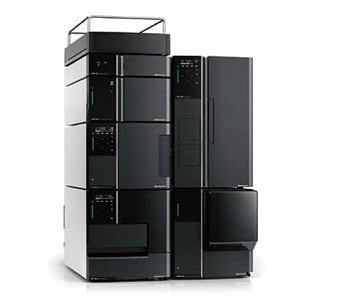
LCMS-2050


- The LCMS-2050 can detect saccharides with higher selectivity and sensitivity than differential refractive index detectors or evaporative light scattering detectors. - The analysis is unaffected by the matrix, allowing simultaneous determination of trace amounts of saccharides.
In 2015, the World Health Organization (WHO) issued guidelines that daily sugar intake should be kept below 25 g. As a standard value stipulated in the Food Labeling Standards of the Consumer Affairs Agency of Japan, a beverage can be labeled as “non-sugar” or “sugar free” if the saccharide content is less than 0.5 g per 100 mL. Sugars are usually detected using a refractive index detector or an evaporative light scattering detector since these compounds have little or no UV absorption. However, if the sugar concentration is low, as in non-sugar beverages, a mass spectrometer with high selectivity and sensitivity is more effective. This article describes analyses of saccharides in non-sugar beverages separated by hydrophilic interaction liquid chromatography (HILIC) and detected with a single quadrupole mass spectrometer LCMS-2050.
May 31, 2022 GMT