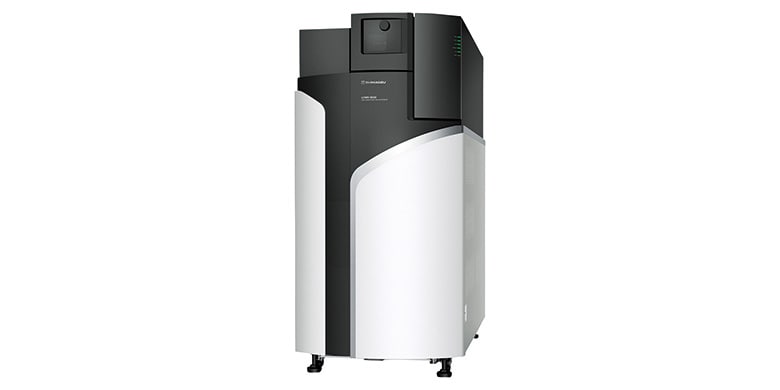
LCMS-9030


- It is possible to identify residual pesticides from the accurate mass and retention time information obtained by the LCMS-9030. - Comprehensive analysis of residual pesticides can be performed with this analytical method. - This method combining QuEChERS (EN 15662) and a SPEEDIA residual pesticides purification kit enables quick and easy sample preparation.
Many pesticides are currently used around the world to meet the growing demand for food along with rapid population increase. While pesticides can enable stable food supply, there are risks to health due to residual pesticides. For that reason, each region and country has established maximum residue levels (MRLs) for pesticides in food and strictly regulates them. Currently, triple quadrupole mass spectrometers, that can perform quantitative analysis highly selectively and highly sensitively, are widely used for the analysis of residual pesticides in food. However, this method can only detect the envisaged target compounds, and there is a limit to the number of compounds that can be measured at one time. Therefore, comprehensiveness is limited for use in screening applications. Against this background, comprehensive analysis for residual pesticides in full scan mode using a high-resolution mass spectrometer is attracting attention. In this article, an example of comprehensive analysis of residual pesticides in strawberries using the quadrupole time-of-flight mass spectrometer LCMS-9030 is introduced.
October 26, 2022 GMT