IRSpirit


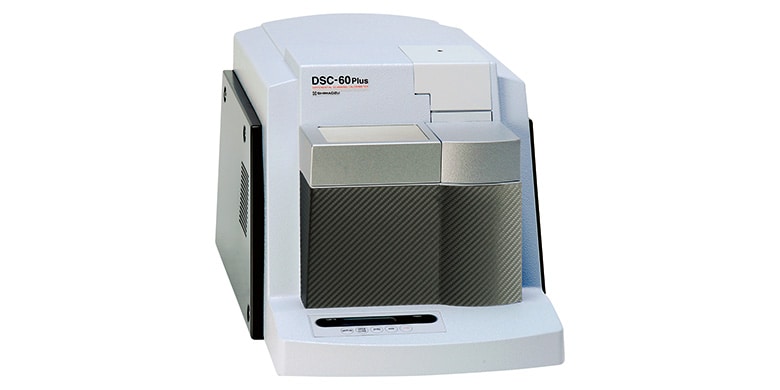
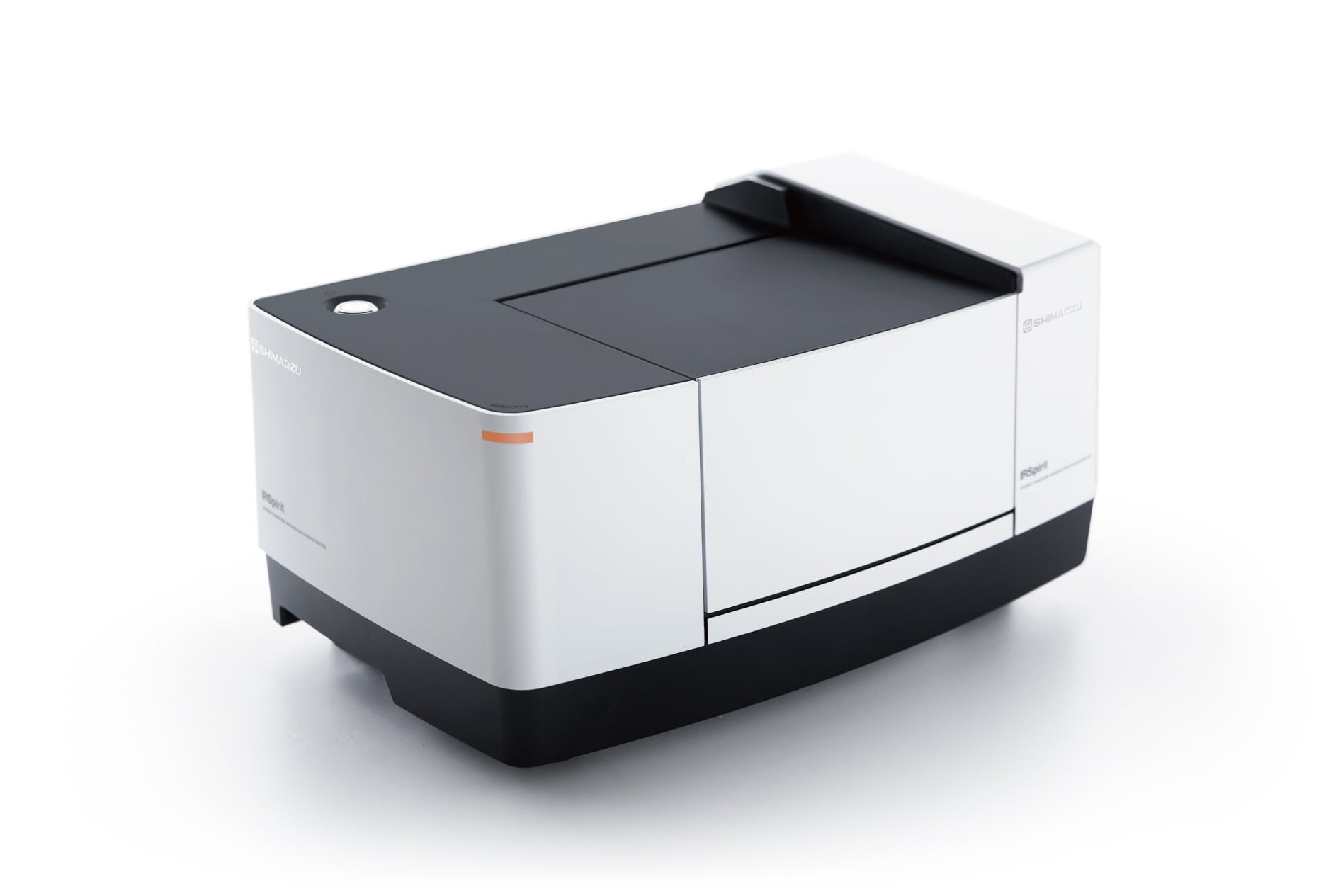
- IRSpirit can be used to evaluate the composition of electrode materials, and the combination of electrode materials can be expected to improve battery characteristics such as energy density. - DTG-60 and DSC-60 Plus can be used to evaluate the thermal characteristics of electrode materials in order to optimize and improve the thermal stability of batteries.
In recent times, there have been discussions about the safety and environmental sustainability of lithium-ion batteries (LIBs). Intensive research is also carried out on inactive materials such as separators, conductive agents and binders, so that the battery cells can be manufactured by a completely water-based route without the use of organic solvents. Binders are an important part of electrode formulation in LIBs because they maintain the physical structure and prevent the electrode from falling apart. Poly(vinylidene‐fluoride) (PVDF) is usually used as cathode IRSpiritTM FTIR with QATRTM-S binder, due to its excellent chemical and electrochemical resistance, good thermal and mechanical stability, and suitable rheological properties with carbon materials. However, environmentally unfriendly solvents are used during the electrode manufacturing process. In environmentally-friendly electrode fabrication processes, water-soluble polymeric binders such as sodium carboxymethylcellulose (NaCMC) and styrene−butadiene rubber (SBR) are used instead. This application news describes the use of Fourier Transform Infrared Spectrometry (FTIR), Thermogravimetric Analyzer Temperature Range (TGA) and Differential Scanning Calorimeter (DSC) for characterization of 3 types of battery binders - NaCMC, PVDF and SBR.
January 12, 2023 GMT
Some products may be updated to newer models