
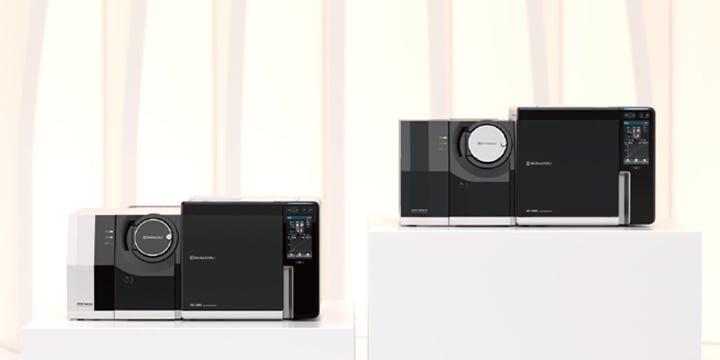
GCMS-TQ RX Series


- The method involves study of 72 pesticide residues for their LOQ on both LC-MS/MS and GC-MS/MS, based on SMPR set for recovery, repeatability (RSDr) and within-laboratory reproducibility (RSDR). - A modified QuEChERS extraction procedure has been employed for quantifying pesticides at trace levels in complex matrix like norbixin using Ultra-fast technologies of LCMS-8050 and GCMS-TQTM8040 NX. - LCMS Method Package for Residual Pesticide Ver.3 and GCMS Smart Pesticides DatabaseTM Ver.2 from Shimadzu Corporation enables ease of optimizing instrumental method.
Norbixin is the yellow-(red) orange carotenoid, which in combination with bixin, constitutes for 80 % of red-orange annatto dye which is extracted from the pericarp of the seeds of Bixa Orellana. The annatto pigment has global economic significance, as it is one of the most widely used natural dyes to color food, cosmetics and pharmaceutical products. Owing to its large culinary uses and other diverse applications, use of chemical pesticides for its production in large quantities is imperative. Dye extraction process may result in concentration of pesticides and in turn contribute to adverse impact on human health when incorporated in various preparations. Hence quantitation of residual pesticides in norbixin colour additive becomes very important. As the oleoresin is a complex matrix for extraction, it is required to develop a rugged, sensitive and efficient method for residual pesticide analysis. This study reports a highly sensitive method for simultaneous quantification of multiple pesticides in complex matrix of norbixin using modified QuEChERS with triple quadrupole liquid chromatography (LC-MS/MS) and gas chromatography (GC-MS/MS) system.
June 13, 2023 GMT
