
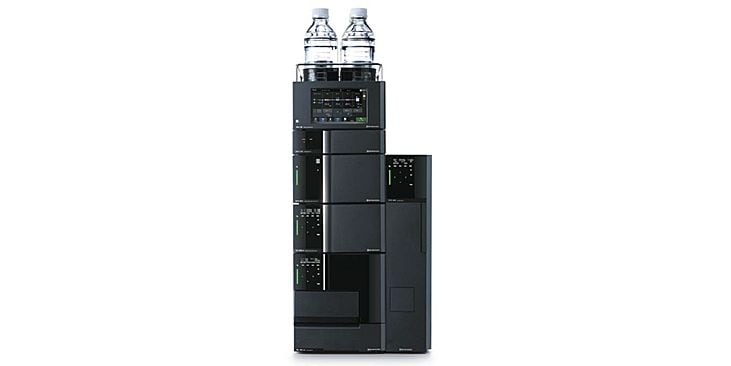
Nexera Series Ultra High Performance Liquid Chromatograph


- Rapid, simple and sensitive melatonin method with LLOQ of 5 pg/mL - Low plasma volumes in sample extraction extends the life of mass spectrometer - Validated method easy to transfer at customers laboratory
Melatonin is an endogenous hormone produced by the pineal gland that regulates sleep-wake cycles and when provided exogenously has beneficial effects on sleep-onset latency. Melatonin is used orally for jet lag, insomnia, shift- work disorder, circadian rhythm disorders in the blind (evidence for efficacy) and benzodiazepine and nicotine withdrawal. Evidence indicates that melatonin is likely effective for treating circadian rhythm sleep disorders in blind children and adults. It has received FDA orphan drug status as an oral medication for this use. The average maximal serum concentration (Cmax) is 405 pg/mL in the low dose group and the bioavailability of exogenous melatonin was highly variable, ranging from 1 to 74%. Hence, it is necessary to develop a bioanalytical assay that have very low LLOQ concentration equivalent to 10 pg/mL. Several methods for determination of melatonin in biological matrices were reported up to date, most of these assays are at a sensitivity level higher than 20.00 pg/ml or use relatively large plasma volumes, which is a great concern for regulatory compliance of clinical studies for low-dose formulations. These methods fall short of the ideal target sensitivity required by the intended studies. This motivated us to develop fast, simple, sensitive method using minimal sample volume to support regulatory studies.
September 5, 2023 GMT
Some products may be updated to newer models
