
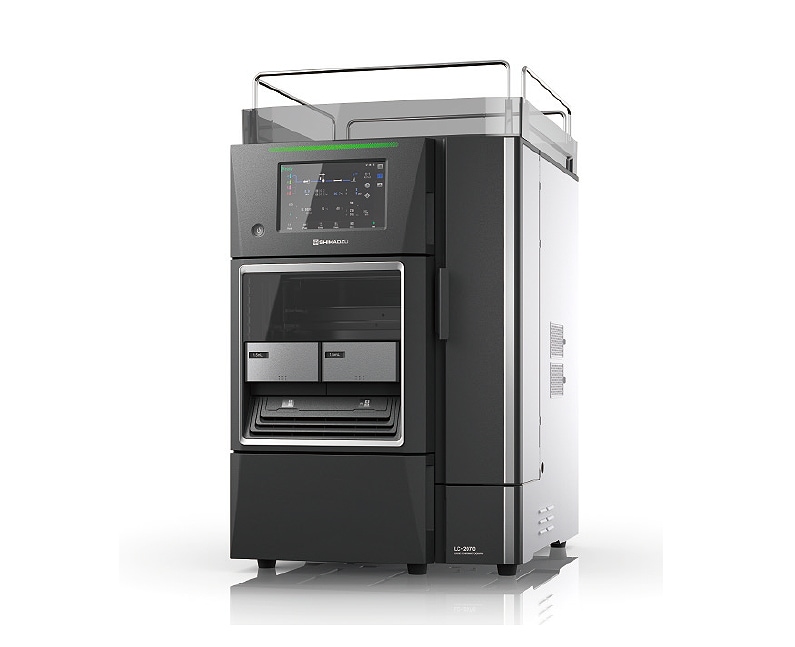
i-Series


- Simultaneous analysis of dipotassium glycyrrhizate and tranexamic acid in cosmetics can be performed with simple pretreatment. - Photodiode array (PDA) detector provides reliable identification performance for even heavily contaminated samples using UV-visible absorption spectral information.
Glycyrrhizic acid is a medicinal compound found in Chinese crude medicines such as licorice and is generally known to have pharmacological effects such as anti-allergy, anti-inflammation, and detoxification. Dipotassium glycyrrhizate (GK2), a salt from glycyrrhizic acid is widely used for products such as cosmetics, shampoos, and toothpastes, in addition to over-the-counter drugs. Tranexamic acid (TA), an artificially synthesized amino acid, is generally known for its anti-inflammatory, hemostatic, and other pharmacological effects. Additionally, it is also used in cosmetics as an active whitening agent. In general, it is difficult to retain TA on C18 columns due to its high polarity, and it often show tailing peak shape due to its basicity. On the other hand, GK2 is a compound that is relatively well retained on C18 columns. Therefore, this article introduces of TA and GK2 in cosmetics employing sodium perchlorate as a component of mobile phase for simultaneous analysis of these two compounds.
September 12, 2023 GMT