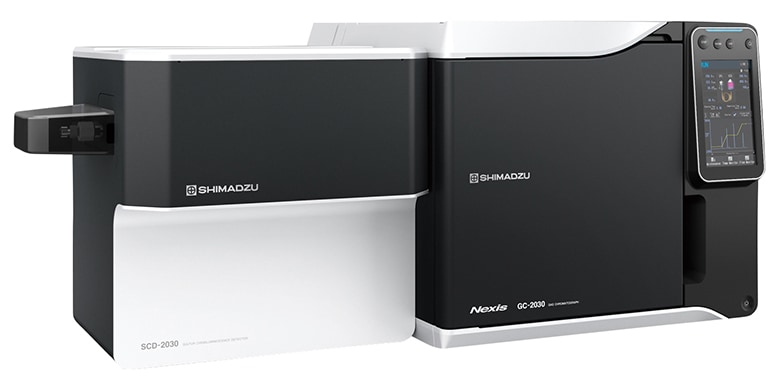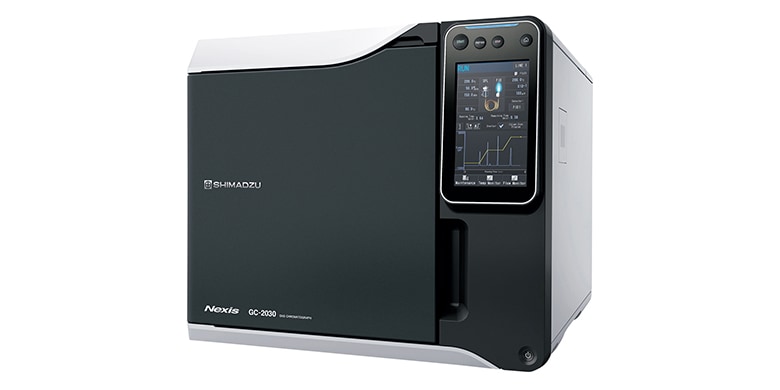
Nexis GC-2030


・ Avoid the use of flammable gas (for GCMS-PCI) and radioactive detector (ECD) ・ Enhanced productivity while achieving high sensitivity for both pesticides and nitrosamines by utilizing Shimadzu GCMSTQ8050 NX system with Twin Line MS Kit
Water contamination by nitrosamines and pesticides can occur through various sources, including industrial runoff, agricultural practices, and wastewater discharges[1]. The US EPA recommends specific analytical methods for the analysis of nitrosamines and organochlorine pesticides. Traditionally, GCMS with Positive Chemical Ionization (PCI) mode is used for nitrosamines analysis (EPA 521), while GC with Electron Capture Detector (ECD) is employed for organochlorine pesticides analysis (EPA 8081) [2,3]. However, these techniques necessitate the use of flammable gas or radioactive detector, which requires special permits. Advancements in analytical technology have introduced an alternative approach using Multiple Reaction Monitoring (MRM) mode in a single GC-MS/MS system with the Twin Line MS kit. This innovative approach offers enhanced productivity by allowing 2 columns to be installed in the same instrument, while achieving high sensitivity. The method and quantitation detection limits are evaluated to ensure reliable results.
February 15, 2024 GMT