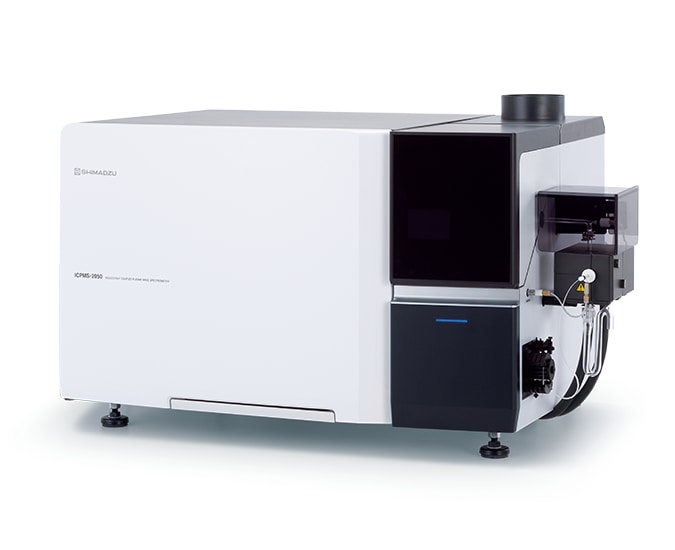
ICPMS-2040 Series / ICPMS-2050 Series


- The 24 elements identified in the ICH Q3D guideline can be measured with high sensitivity. - Pharmaceutical raw materials that are dissolved in ethanol can be easily analyzed using the Shimadzu ICP-MS organic solvent system.
The presence of impurities in pharmaceutical ingredients is a concern within the medical pharmaceutical industry. Therefore, the International Council on Harmonisation of Technical Requirements for Registration for Pharmaceuticals for Human Use requires the management of metallic impurities in pharmaceuticals through guidelines using ICP-MS (ICH Q3D). This standard specifies the Permitted Daily Exposure (PDE) for 24 elements of toxicological concern in oral preparations, injectables, and inhalants. In the case of oral preparations, only the seven elements of Classes 1 and 2A are considered, except in instances where elements are intentionally added, such as when used as catalysts during synthesis. However, the sources of elemental impurities are diverse and include not only components such as active pharmaceutical ingredients and excipients but also manufacturing equipment and utensils. ICP-MS has the advantage of being able to analyze various trace elements simultaneously. It is often used for the analysis of elemental impurities in pharmaceuticals. The analyte for ICP-MS is usually a liquid sample, so solid samples require pretreatment. In this Application News, we measured three types of pharmaceutical raw materials and analyzed the impurities using the Shimadzu ICP-MS organic solvent system. Furthermore, the accuracy, precision, detection limits and specificity of 24 target elements are presented according to USP and EP, assuming measurements below the Control Threshold of 30 % of the PDE.
September 2, 2025 GMT
Some products may be updated to newer models