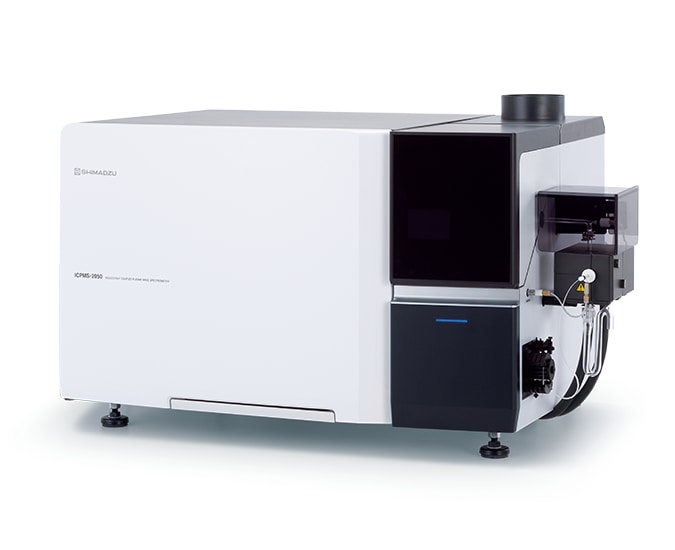
ICPMS-2040 Series / ICPMS-2050 Series


- High-sensitivity analysis at less than 1/100 of Japan’s soil content standard is possible. - Correction methods and H2 reaction conditions reduce interference from rare earth elements when measuring As and Se. - Variation in measurement sensitivity due to the soil matrix is small, enabling stable measurement even when measuring multiple samples over a long time.
Soil pollution occurs when chemical or hazardous substances in the soil harm the environment and human health. Soil pollution may be caused by natural phenomena, but most is caused by human activities such as leakage of hazardous substances from industrial activities and improper disposal of waste. In Japan, soil surveys are conducted in accordance with the Soil Contamination Countermeasures Act to prevent harm to human health. These surveys are mandatory when facilities using specified hazardous substances are decommissioned or when the characteristics of land over a certain size have changed. Two types of tests are conducted: soil leaching tests and soil content tests. Soil leaching tests are conducted to evaluate the risk of ingesting groundwater containing hazardous substances leached from the soil, and soil content tests are conducted to evaluate the risk of directly ingesting hazardous substances from the soil through the mouth or skin. The number of such soil surveys is increasing year by year, and since many samples need to be analyzed simultaneously, even in laboratories that accept them, stable and robust analysis equipment is required. In this Application News, soil content tests were conducted on five types of soil samples using an ICPMS-2050. The results of the validity of the analysis, the influence of interference from rare earth elements (REE), and long-term stability are also presented.
September 9, 2025 GMT