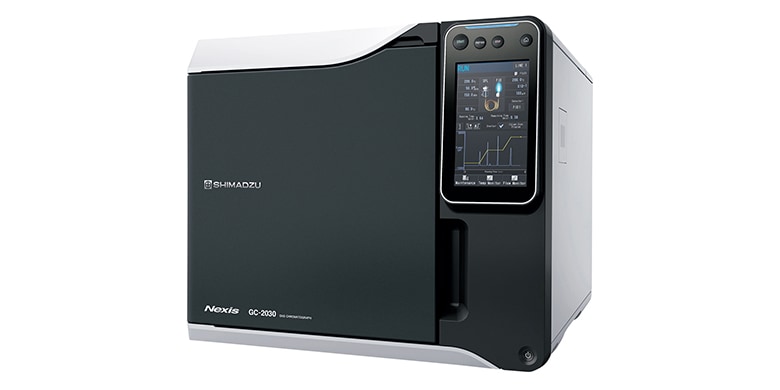
Nexis GC-2030


- The Polyarc system converts organic compounds eluting from the column into methane, enabling sensitivity to be normalized to carbon concentrations. - Even for compounds containing heteroatoms or unsaturated bonds, which tend to show lower sensitivity with FID, the Polyarc reduces response differences. - Because the response is normalized, fewer calibration curves are required even for multicomponent sample analysis.
The Flame Ionization Detector (FID), the most widely used detector for GC, is used for quantitative analysis across a wide range of fields because it can detect almost all organic compounds. However, FID can exhibit sensitivity differences depending on the compound type, such as compounds containing heteroatoms (e.g., oxygen or nitrogen) or those with unsaturated bonds (for details, refer to Application News No.01-01033-EN). As a result, conventional quantitative methods using calibration curves—including external standard methods— typically require a separate calibration curve for each target analyte. This application introduces a case study analyzing a mixed solution of eleven compounds with different functional groups using the Polyarc, a GC microreactor. While compounds exhibit varying sensitivity with FID detection, the Polyarc system reduces sensitivity differences between compounds and facilitates quantitative analysis through simplified calibration curve creation.
December 16, 2025 GMT