HyperVision HPV-X3


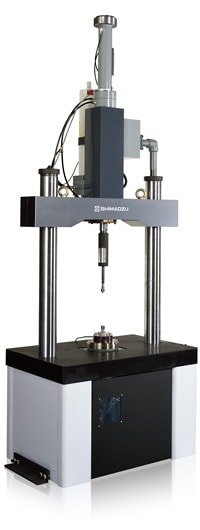
- The HPV-X3 is suitable for observation of fracture of brittle materials such as CFRP because it has a maximum recording speed (framerate) of 20 Mfps. - The HPV-X3 provides improved DIC analysis performance, as its resolution is 3 times higher than that of the conventional high-speed video camera. - The HITS-TX impact testing machine enables testing at a maximum speed of 20 m/s.
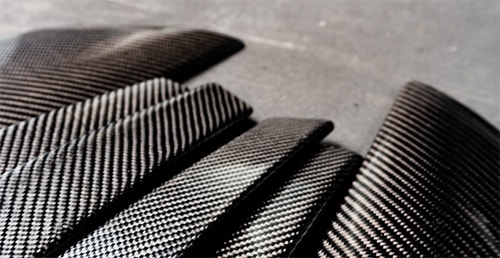
Carbon fiber reinforced plastic (CFRP) is a material with particularly high specific strength, even among composite materials, and used in various applications such as transport aircraft, taking advantage of its excellent mechanical properties. Because CFRP consists of carbon fibers and resin, it shows complex fracture behavior, and brittle fracture progresses from damage as the point of origin. Since fracture proceeds instantaneously, a high-speed video camera with a high recording speed is necessary when observing fracture of CFRP. One method for measuring strain in a high-speed tensile test is Digital Image Correlation (DIC), which visualizes the distribution of strain at the specimen surface by comparing a random pattern on the specimen surface before and after deformation. Thus, a high-speed video camera with a high resolution is also necessary in order to improve the DIC performance. Newly-developed Hyper Vision HPV-X3 high-speed video camera is extremely well-suited to DIC analysis of CFRP, as its recording speed is 2 times faster and its resolution is 3 times higher than the conventional HPV-X2. In this experiment, a high-speed tensile test of CFRP was conducted using a HITS-TX high-speed tensile testing machine. The condition of the test was observed with the new HPV-X3, and the strain distribution of the CFRP test piece was clarified by a DIC analysis of the recorded images.
February 17, 2026 GMT