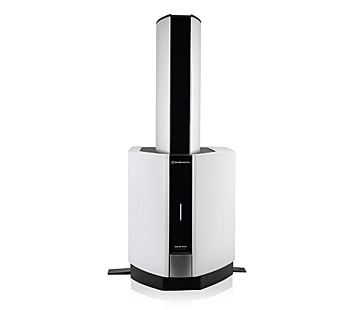
MALDI-8030


- Microbial species can be identified with high accuracy using a database containing over 80,000 registered entries. - Post-acquisition data are processed by a cloud-based identification algorithm, enabling simple and rapid result output. - By using the MALDI-8020 / 8030 EasyCare with standardized measurement procedures, highly reproducible data acquisition is achieved.
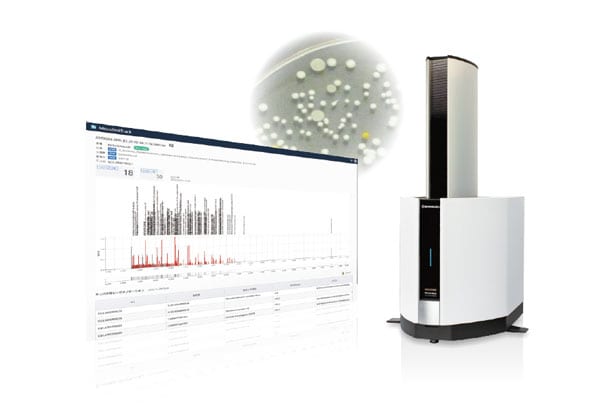
Microbial identification is a fundamental technology supporting research and development, quality control, and risk management across diverse fields, including human health, food, and environmental sciences. In recent years, MALDI-TOF MS has been increasingly adopted for on-site microbial testing because it enables rapid identification with simple sample preparation. However, conventional fingerprint-based methods relying on MALDI mass spectral pattern matching face challenges when reference spectra are unavailable, often requiring the construction of in-house spectral libraries. MicrobialTrack, a MALDI-TOF MS–based microbial identification software, employs a proteomics-based approach derived from genetic information of more than 80,000 taxonomically classified prokaryotic microorganisms. This method enables identification of prokaryotic microorganisms with higher discriminatory resolution than 16S rRNA gene sequence analysis, without the need to build in-house spectral libraries. In this application news, the identification performance of MicrobialTrack combined with the benchtop MALDI-TOF MS system MALDI-8030 EasyCare was evaluated using 50 bacterial strains with high analytical demand in research, food, and industrial applications.
February 24, 2026 GMT
Some products may be updated to newer models