
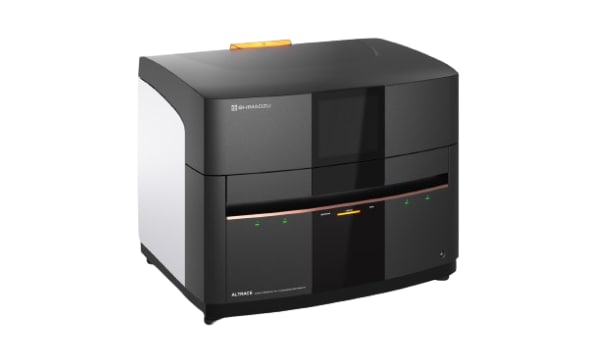
ALTRACE


- ALTRACE can determine levels of heavy metals present in organic compounds at around 1 mg/kg in under 10 minutes per sample. - Analyzing and managing levels of residual metal catalysts can be performed by simply placing samples in the sample vessel and analyzing them without the need for complex sample pretreatment. - By increasing the X-ray tube power and optimizing the optical design, the sensitivity of ALTRACE for heavy metals has been dramatically improved compared to the previous model.
Many industrial products we encounter every day are produced from organic compounds by manufacturing processes that utilize a range of synthesis reactions and metal catalysts. Catalysis can be classified as either homogeneous or heterogeneous (although drug and chemical production processes typically use homogeneous catalytic systems). While homogeneous catalysis allows for precise control over catalytic reactions, recovering the catalyst after the reaction can be difficult. Nevertheless, managing the levels of residual catalysts in industrial products is critical to ensure safety and because of their high costs. For example, the ICH Q3D Guideline for Elemental Impurities (adopted in April 2017) requires risk assessments when materials such as metal catalysts are added intentionally during a production process. Energy dispersive X-ray fluorescence (EDXRF) spectrometry offers a simple but effective technique for assessing the levels of residual metal catalysts. Normally, the lower limit of quantification for EDXRF spectrometric analysis of heavy metals is above 1mg/kg, which limits its use in quantitative analysis. However, the ALTRACE is equipped with a high-power X-ray tube that dramatically improves its sensitivity for heavy metals, enabling their determination at 1 mg/kg and below in less than 10 minutes. This Application News describes using ALTRACE to determine residual levels of a homogeneous catalyst after a synthesis reaction. The catalyst used in this analysis is palladium (Pd), which is a widely applied heavy metal catalyst, and the reaction catalyzed by the Pd catalyst is a cross-coupling reaction. A metal scavenger and activated carbon were each used to remove the Pd catalyst from the reaction products. Metal scavengers are frequently used in this role, and activated carbon offers a relatively cheap method for removing catalysts.
March 10, 2026 GMT