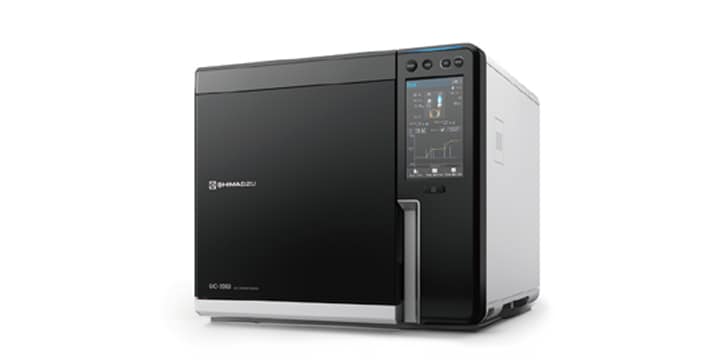
Nexis GC-2060


- By installing an MMI in a Nexis GC-2060 system, a wide variety of injection methods can be used. - By using a MonoTrap silica monolith sorbent to collect aroma components, highly sensitive analysis can be achieved without cumbersome extraction procedures. - With the MMI thermal desorption/extraction mode, aroma components can be analyzed without dedicated sample-preparation equipment.
Given that aroma is an important attribute of foods, gas chromatography (GC) and gas chromatography–mass spectrometry (GC-MS) are often used for qualitative and quantitative analysis of aroma components. Aroma components are typically collected from foods using headspace sampling, solid-phase microextraction (SPME), or liquid extraction methods, but for this article, a MonoTrap silica monolith sorbent was used to collect aroma components from alcoholic beverages. With the MonoTrap, aroma components can be collected and concentrated without cumbersome extraction procedures, enabling highly sensitive analysis. In this case, aroma components were analyzed using a Nexis GC-2060 gas chromatograph system equipped with a Multi- Mode Inlet (MMI). The MMI is a newly developed inlet that supports a wide range of injection methods. This article describes using the thermal desorption/extraction mode, one of the methods available with the MMI, to desorb the aroma components collected on the MonoTrap sorbent and inject them into the GC unit. That enabled highly sensitive aroma analysis while reducing analysis costs, without using dedicated sample-preparation equipment.
April 7, 2026 GMT