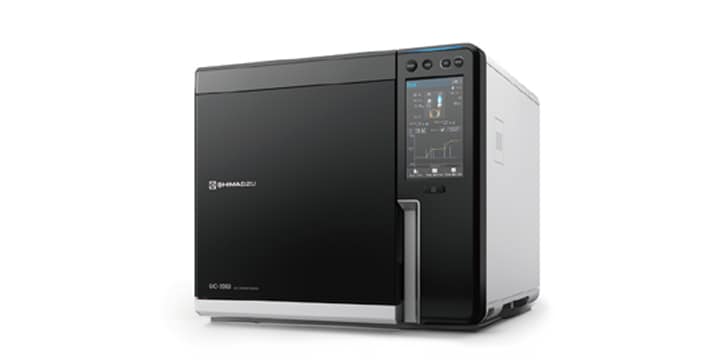
Nexis GC-2060


- The Nexis GC-2060, equipped with a newly developed FID, provides excellent linearity for high-concentration samples. - With rapid oven heating and cooling, the Nexis GC-2060 delivers accurate, reproducible results during temperature ramping to elute high-boiling compounds. - A special liner for aqueous solutions and an Xtra Life Microsyringe enable reliable, repeatable results even with aqueous samples.
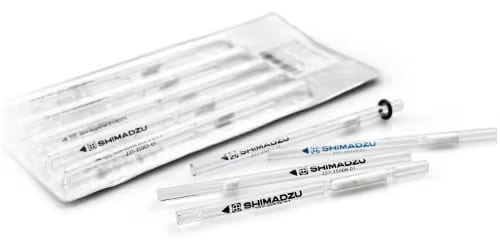
The Japanese National Tax Agency (NTA) prescribes the official analytical methods for ethanol in alcoholic beverages. Among these, the gas chromatography method specifies an isothermal oven temperature of 50 °C. However, at 50 °C, water and high-boiling compounds in alcoholic beverages do not elute from the column. Therefore, after the target analyte (ethanol) and the internal standard have eluted, the oven temperature must be increased to expel the water and high-boiling compounds from the column. In GC analysis of samples containing a high water content (e.g., alcoholic beverages), sample vaporization may become unstable, leading to distorted peak shapes and poor repeatability. In addition, when a standard micro-syringe for an AOC autosampler is used with aqueous solutions, the plunger may become heavy during aspiration/dispensing, which can also degrade repeatability. This article introduces an example of ethanol analysis in alcoholic beverages using the Nexis GC-2060 equipped with a newly developed FID. The Nexis GC-2060 can be configured with the new, highly sensitive FID, which offers excellent linearity. In addition, its rapid oven heating and cooling enable high-boiling compounds to be quickly expelled from the column, thereby shortening the overall analysis time. Furthermore, using a special liner for aqueous solutions and the Xtra Life Microsyringe, both of which are effective for aqueous samples, enabled highly repeatable analysis.
April 15, 2026 GMT
Some products may be updated to newer models