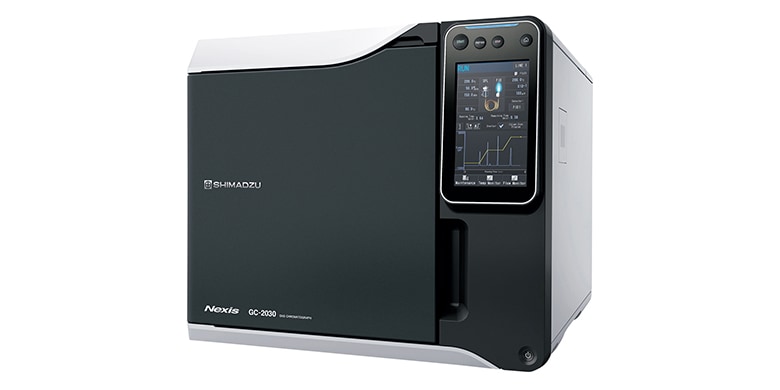
Nexis GC-2030


- Shimadzu Nexis GC-2030 can be effectively used for determination of adulteration of Ghee with vegetable oil. - The Nexis GC-2030 easily meets the acceptance criteria as per the proposed FSSAI method no.01.097:2022. - This method is suitable for routine food industry analysis and academic research.
The most common milk product in Indian cuisine is ghee or clarified butter. Due to its high cost, ghee is adulterated with vegetable oil, to gain commercial benefits. β-sitosterol, a common phytosterol, found in a variety of natural sources, including vegetable fat or oil from plants. It is used as a marker of vegetable oil adulteration in ghee. The primary goal of this study is to assess the vegetable oil adulteration in ghee by analyzing β-Sitosterol as a marker using gas chromatography (GC). This will establish a foundation for the rapid detection of ghee adulteration. In this study, a simple, sensitive, and inexpensive method is developed for extraction of β-Sitosterol from ghee which is then subjected to gas chromatography with flame ionization detection for quantitation. The effects of several important parameters influencing the extraction efficiencies of β-Sitosterol including water-immiscible organic solvent (type and volume), volume of water, sonication time, surfactant (type and concentration), and organic modifier (type and volume) were investigated. This method is ideal for routine analysis in the food industry during the manufacturing, processing, and commercial testing of milk fat samples, or for academic research purposes.
May 14, 2026 GMT