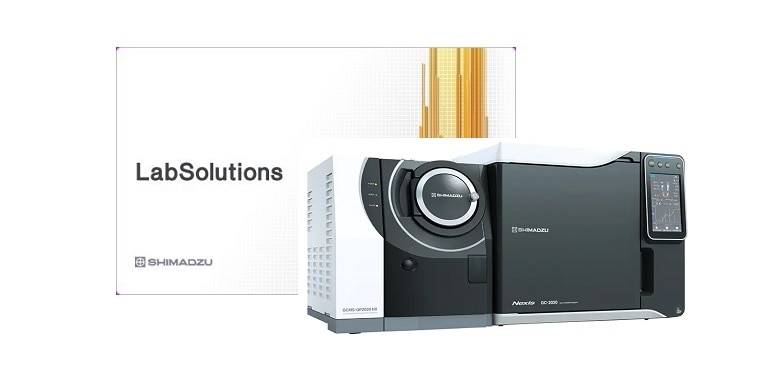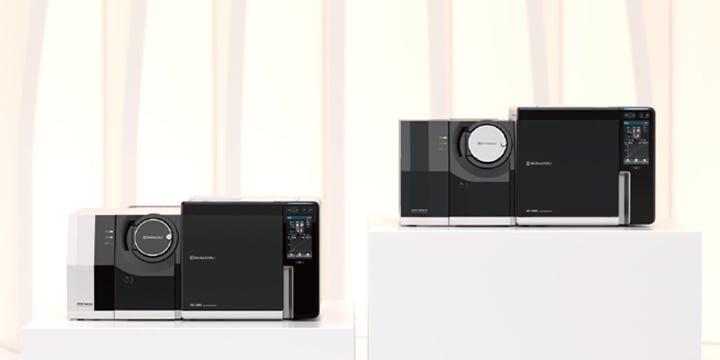
GCMS-TQ RX Series


- The MMI’s rapid heating and cooling technology significantly reduces waiting time during inlet maintenance, improving instrument uptime. - The Smart Pesticides Database enables automatic creation of analytical methods without the need for pesticide standards. - Peakintelligence for GCMS uses AI-based peak processing to deliver highly accurate analysis with no parameter settings required.
GC-MS/MS is an indispensable tool for the simultaneous analysis of pesticide residues in food. However, improving productivity in high-throughput workflows remains a persistent challenge. With the increasing use of simplified sample preparation methods such as QuEChERS, contamination of the inlet by matrix components is unavoidable, and frequent inlet maintenance, including liner replacement, is often required. Because this maintenance involves both cooling the inlet and waiting for temperature re-stabilization afterward, it can become a major source of instrument downtime. The newly developed Multi-Mode Inlet (MMI) incorporates Shimadzu’s proprietary thermal insulation technology, providing excellent temperature stability together with rapid heating and cooling performance. While maintaining high data compatibility with conventional split/splitless inlets, the MMI significantly reduces the waiting time associated with inlet maintenance. In this Application News, simultaneous multiresidue analysis in SPL mode is demonstrated for four food matrices with different characteristics—spinach, orange, avocado, and ginger—using the GCMS-TQ 8040 RX triple quadrupole GC-MS/MS equipped with the MMI.
July 7, 2026 GMT
Some products may be updated to newer models