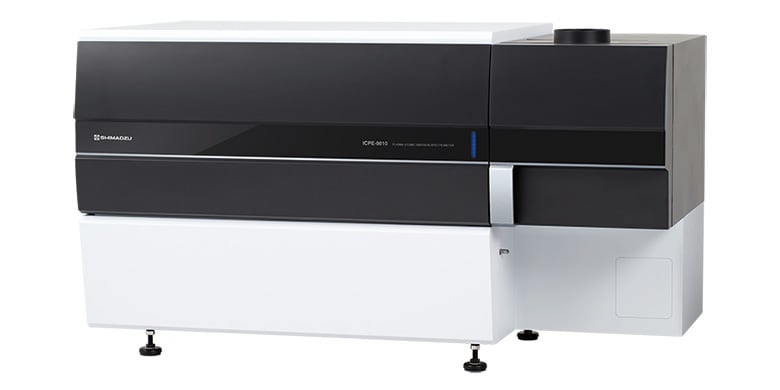
ICPE-9800 Series


- The ICPE-9820 enables analysis across a wide concentration range, from trace to major elements in steel. - Using a torch for high-salt samples and a water bubbler can suppress salt deposition when analyzing high-salt samples. - The use of a vacuum spectrometer enables rapid startup and quick analysis in the vacuum ultraviolet region (wavelengths below 190 nm).
Steel materials are widely used in a diverse range of industries, including construction, transportation, and machinery manufacturing, and are indispensable in modern society. Steel contains various elements, and the types and concentrations of these elements significantly influence its properties. Accordingly, elemental analysis is essential for quality assurance and performance control. The elements in steel range from trace constituents to major components, with concentrations spanning a broad range from mg/L levels to percentage levels. Inductively coupled plasma atomic emission spectrometry (ICP-AES) is well suited to the analysis of elements across such a wide concentration range. It enables highly accurate quantitative analysis from trace elements to major components. This Application News presents an analysis example of a stainless-steel certified reference material using the Shimadzu ICPE-9820 multi-type ICP atomic emission spectrometer.
September 7, 2026 GMT