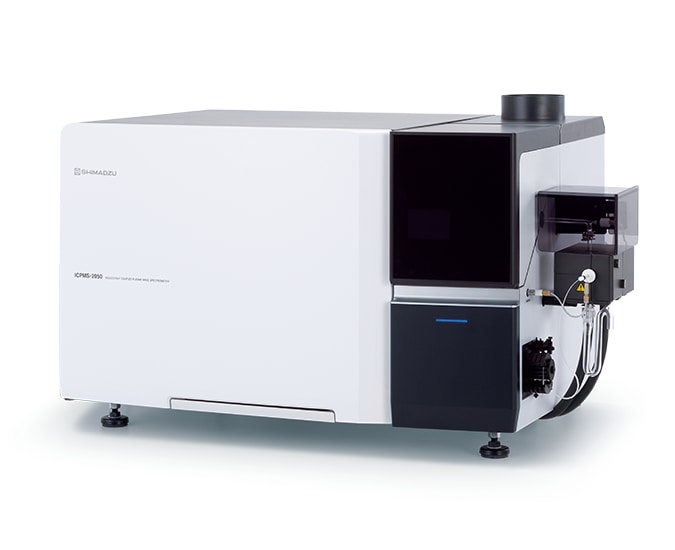
ICPMS-2040 Series / ICPMS-2050 Series


- Even high-matrix metal samples can be analyzed using the Aerosol Dilution System. - Trace elements in steel can be analyzed simultaneously under a single He collision mode, reducing analysis time. - Operating costs can be reduced by using a mini torch, which reduces argon consumption.
In high-performance metallic materials such as steel, material properties are strongly influenced by trace element concentrations, making their proper control extremely important. Conventionally, inductively coupled plasma atomic emission spectrometry (ICP-AES) has been widely used for trace element analysis in metallic materials. In Japan, steel samples have been controlled and analyzed based on JIS G 1201 and JIS G 1258. Recently, however, as metallic materials have become increasingly sophisticated, there has been a growing need to control elements at concentrations below those that can be addressed by conventional methods. Inductively coupled plasma mass spectrometry (ICP-MS) is known as a highly sensitive technique for trace element analysis, but in the past it was not always suitable for analyzing high-matrix samples such as metals. In recent years, however, improvements in sample introduction systems, including gas dilution technology, have made it possible to apply ICP-MS to high-matrix samples as well. This article describes the trace element analysis of certified reference materials for steel using the Aerosol Dilution System installed as standard in the ICPMS-2050. By reducing the amount of sample introduced into the plasma through gas dilution, matrix-induced decreases in signal intensity and signal drift could be effectively suppressed, enabling stable analytical results. The results are presented below.
September 7, 2026 GMT