ALTRACE


- Results consistent with those from ICP-AES can be obtained. - No acid pretreatment is required, so samples can be analyzed after simply loading them into the sample container. - ALTRACE systems can increase the efficiency of research and development operations for fertilizers that contain compost, as well as for incoming inspection of raw materials.
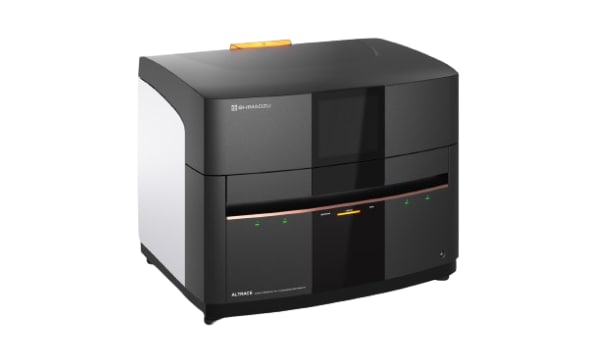
The Japanese Ministry of Agriculture, Forestry and Fisheries recommends the active use of compost as fertilizer to reduce greenhouse gas emissions from livestock manure treatment and reduce the use of chemical fertilizers. At the same time, compositional analysis is indispensable for the safe and effective use of compost as a regional resource. Quantification of the three primary fertilizer nutrients—nitrogen, phosphate, and potassium—as well as the carbon/nitrogen (C/N) ratio, pH, electrical conductivity (EC), and heavy metals content allows more precise fertilization planning and optimized use in combination with chemical fertilizers, which helps stabilize crop productivity and quality while reducing environmental impacts caused by excessive application. Elemental analysis of compost is commonly performed by atomic absorption spectrophotometry (AAS) or inductively coupled plasma atomic emission spectrometry (ICP-AES), both of which generally require pretreatment such as acid digestion. In contrast, X-ray fluorescence analysis does not require such acid treatment. Irradiating the compost with X-rays enables measurement of the average elemental composition within the irradiated area, equivalent to bulk analysis. For this Application News article, compost was qualitatively and quantitatively analyzed using an ALTRACE energy dispersive X-ray fluorescence (EDXRF) spectrometer. The validity and usefulness of the quantitative values obtained with the EDXRF system were also evaluated by comparison with ICP-AES results. Although X-ray fluorescence spectrometry is not specified in the official fertilizer testing methods, its ease of use contributes to more efficient fertilizer R&D and incoming inspection of raw materials.
September 16, 2026 GMT