IRXross


- This technique can be used to detect and differentiate microbial contamination at the species level from a bacterium of the same genus during the production of microbial products. - The diffuse reflectance accessory and microfocus plate enable efficient multi-sample measurements. - An analysis time of around 30 seconds per sample enables the rapid completion of analysis tasks.
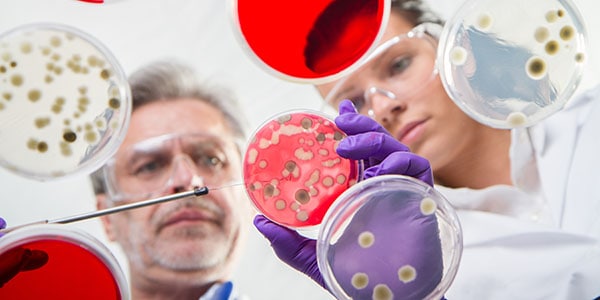
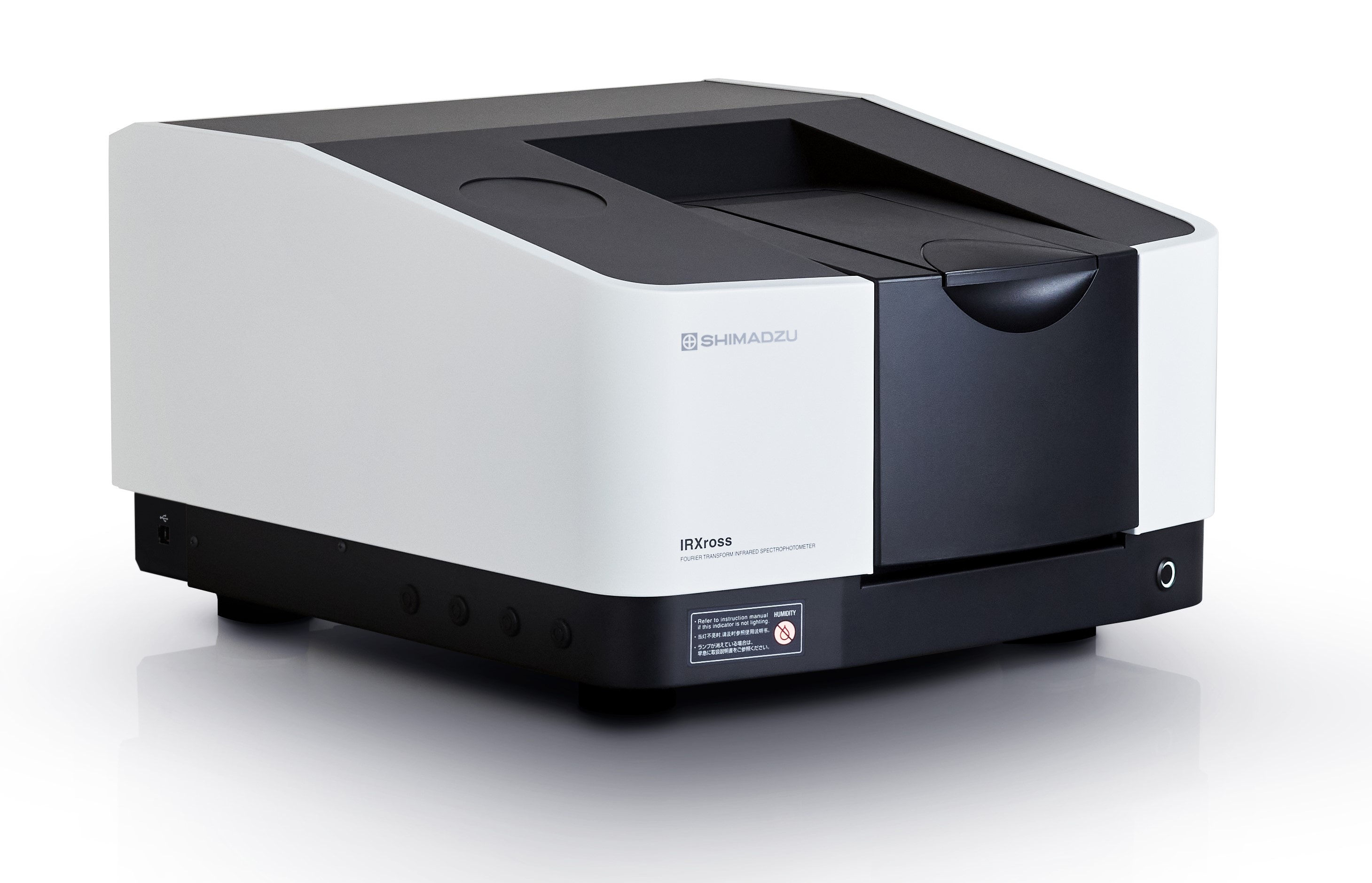
The production of microbial products involves the following five steps: thawing stock cells (activation), pre-culture (in a small volume of medium), expansion culture (in a large-scale culture), harvesting, and downstream processing to create the final product. However, microbial contamination of the production process has a critical effect on product quality and safety, so it must be detected quickly and accurately. Fourier transform infrared spectrophotometry (FTIR), an analytical technique for characterizing the molecular structure of analyte substances, has attracted attention due to its effectiveness, particularly in identifying microorganisms. Infrared spectra recorded by FTIR analysis of a microorganism contain information about the lipids, polysaccharides, proteins, carbohydrates, and other molecular components of that microorganism, which can be used to monitor microorganisms being cultured under a fixed set of conditions (the same culture medium, temperature, and time). This Application News describes combining the IRXross FTIR system with a DRS-8000 diffuse reflectance accessory (a custom model) to detect and differentiate microbial contamination at the species level from a bacterium of the same genus during the production of microbial products. A previous Application News reported on using FTIR to detect contamination by two different types of bacteria. However, this Application News attempts the more difficult task of detecting and differentiating contamination at the species level from bacteria of the same genus. Differentiating between microorganisms of the same genus is comparatively difficult since the organisms are genetically extremely similar, as they share a large majority of the same DNA and have very similar structural cellular components.
September 28, 2026 GMT