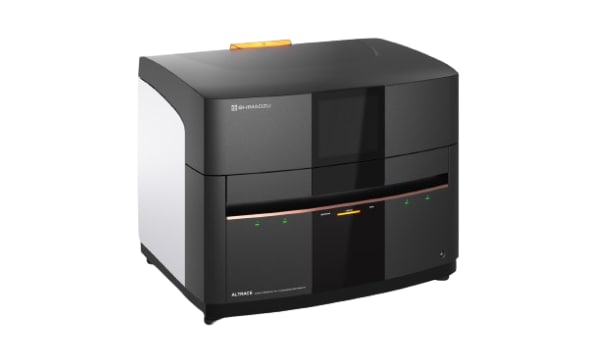
ALTRACE


- Energy-dispersive X-ray fluorescence (EDXRF) analysis enables rapid, non-destructive analysis of inorganic elements in crude drugs with only simple sample preparation. - ALTRACE EDXRF spectrometers offer sufficient analytical sensitivity for screening samples with respect to the limits specified in the Japanese Pharmacopoeia for testing heavy metals and arsenic. - Qualitative-quantitative analysis can easily determine the elemental composition of crude drugs, including not only heavy metals but also mineral components.
Crude drugs are derived from natural sources, such as plants and animals. Qualitative and quantitative analysis of their elemental composition is important for ensuring their quality and safety. In particular, the content of mineral components and heavy metals in crude drugs can vary depending on the cultivation environment and processing steps. Therefore, they must be evaluated by appropriate analytical methods. Methods for analyzing elemental composition include colorimetric methods, such as specified in the Japanese Pharmacopoeia (JP) for testing heavy metals and arsenic. Instrumental techniques, such as atomic absorption spectrophotometry (AAS), inductively coupled plasma atomic emission spectrometry (ICP-AES), and inductively coupled plasma mass spectrometry (ICP-MS), are also used in some cases. The heavy metals test protocol in the JP adds a sodium sulfide reagent under acidic conditions and then evaluates resulting coloration as a lead (Pb)-equivalent value. That offers the advantage of being able to assess the total amount of heavy metals with a simple process. However, it has several drawbacks, including the need for skilled operation and reagent handling, as well as limited sensitivity and reproducibility. In contrast, though AAS and ICP-AES, ICP-MS enable highly sensitive and highly accurate analysis, they require complete dissolution of samples in an acid, such as nitric acid or hydrochloric acid, as well as advanced expertise in chemical pretreatment. In addition, the instrument running costs and installation requirements can make their adoption difficult. Given such background circumstances, the adoption of analytical methods that enable rapid analysis with simpler sample preparation are increasingly expected. This article describes examples of analyzing hazardous heavy metals in crude drugs using the calibration curve method and examples of qualitative-quantitative analysis using the Fundamental Parameter (FP) method, both performed with an energy dispersive X-ray fluorescence (EDXRF) spectrometer.
September 29, 2026 GMT