Sepraflo Ion-Exchange Resins
Chromatography Resins
High-Performance Ion-Exchange Resins for Protein Capture
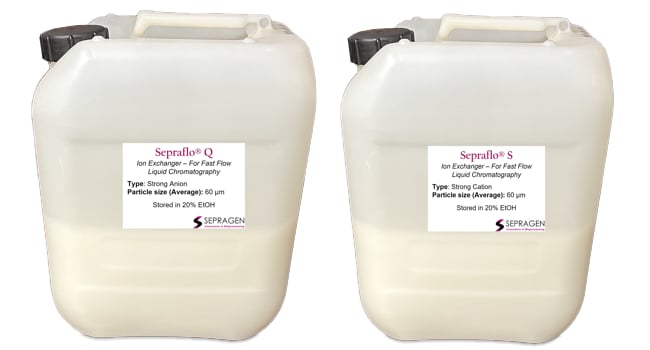
Ion-Exchange Resins (Sepraflo Q & Sepraflo S)
Sepraflo® resins are designed for the process-scale separation of biological molecules. They can be operated at high flow rates, typically up to 50% higher than those achieved with commonly used resins from other suppliers, without the compression associated with agarose or cellulosic beads or the fracturing and breakage associated with silica or macroporous PSDVB-based beads.
The resins feature a large nominal pore size of up to 700 Å, facilitating rapid mass transfer of large biomolecules while providing high static and dynamic binding capacities. They are compatible with cleaning using 1 M sodium hydroxide.
Sepraflo resins consist of rigid, macroporous beads with a nominal particle size of 50 μm and can withstand operating pressures in excess of 500 psi. The resin matrix is based on a hydrophilic glycidyl methacrylate copolymer, a material widely used in biomedical applications due to its excellent biocompatibility.
Features
- Higher Flow Rates than “Fast Flow” Media
- Cost-Effective Performance
- Excellent Binding Capacity
- Cleanable in 1 M NaOH
Flow Rate vs. Pressure Performance
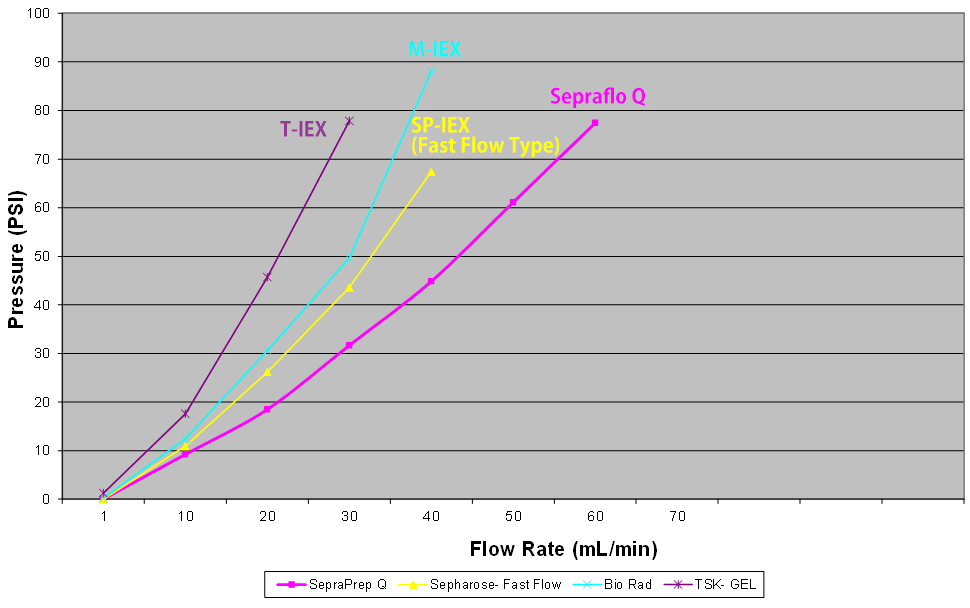
The data below compare the flow rates achieved with various resins at different pressures. Sepraflo resins consistently show higher flow rates than the other resins tested.
Ion-Exchange Binding Capacity of Sepraflo
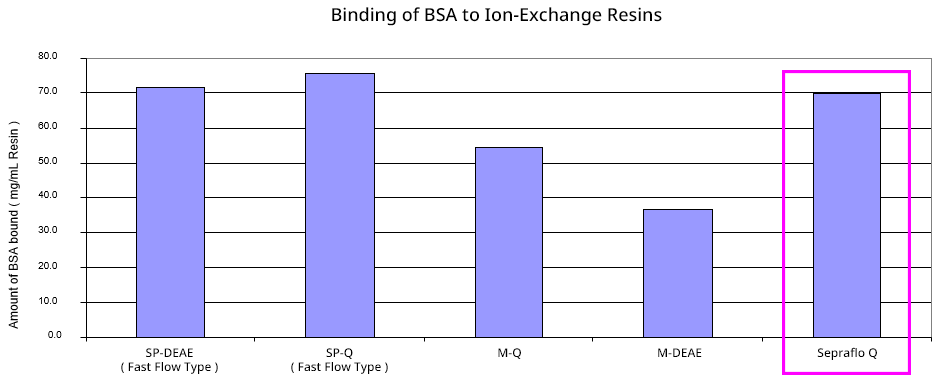
The data below compare the binding capacity of Sepraflo resins with that of other commercially available resins. The resins show comparable binding capacity for the model protein BSA. Binding capacities vary among proteins depending on factors such as charge, size, molecular weight, pI, tertiary structure, solution pH and ionic strength, and competitive binding by oyher counterions.