
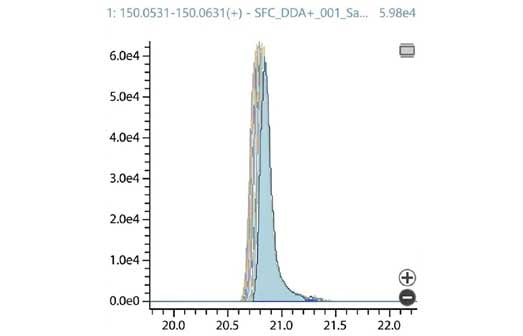
The Analyze non-targeted algorithm extracts compound features from each sample and aligns them across the sample set by accurate mass and retention time.


Non-Targeted Analysis Software for LC/QTOF Data
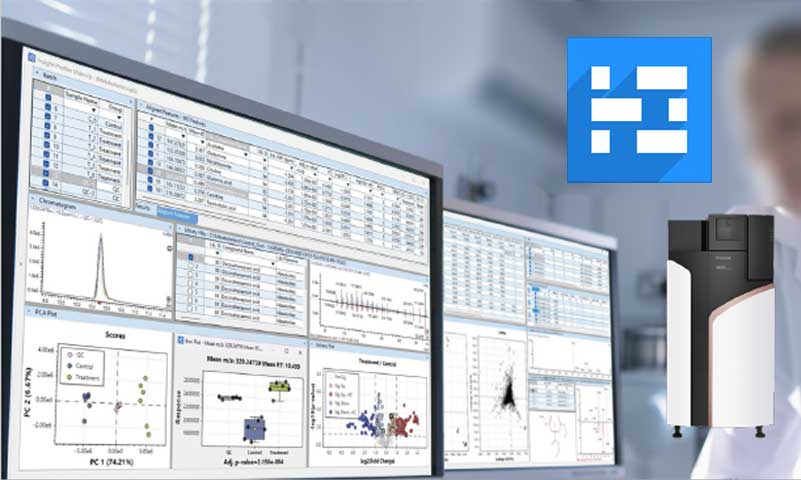
LabSolutions Insight Profiler is a unified, end-to-end workflow for LC/QTOF data processing — with a "single-click" approach. Insight Profiler is purpose-built for non-targeted analysis in suspect screening, unknown identification, and metabolomics across complex sample sets.
Traditionally, untargeted LC/QTOF workflows demanded sequential processing across multiple platforms. This software consolidates that entire pipeline into a single configurable method. Load your data, set your parameters once, and a single click drives automated feature detection, alignment, large-scale suspect screening against MS/MS libraries, PCA, loadings plots, and volcano plots — with results comparable to the multi-platform workflow obtained in a fraction of the time. Pre-built method templates accommodate both new and experienced analysts, supporting applications across toxicology, food safety, extractables and leachables, and metabolomics-based biomarker discovery.
The Analyze non-targeted algorithm extracts compound features from each sample and aligns them across the sample set by accurate mass and retention time.
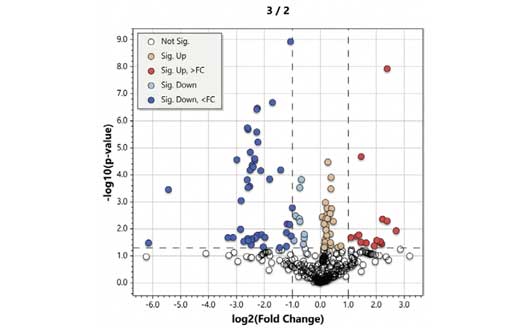
Integrated statistical tools — t-test, fold-change analysis, PCA scores and loading plots, volcano plots, and box plots — identify components that are shared or significantly different across sample groups.
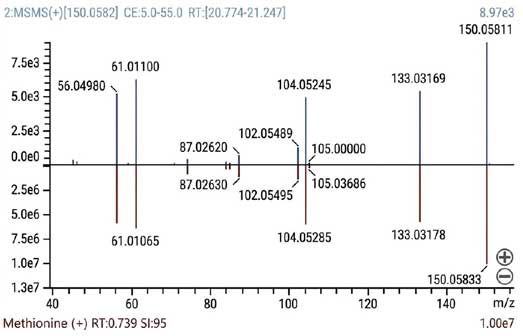
Suspect screening hits and statistically significant compounds are identifiable against curated Shimadzu and public MS /MS libraries.
Profiler processing methods can be predefined for specific workflows — whether suspect screening or metabolomics — enabling both new and advanced users to generate results quickly with a single click. Each processing method includes optimized settings for its intended application, creating a streamlined platform for processing complex data sets.
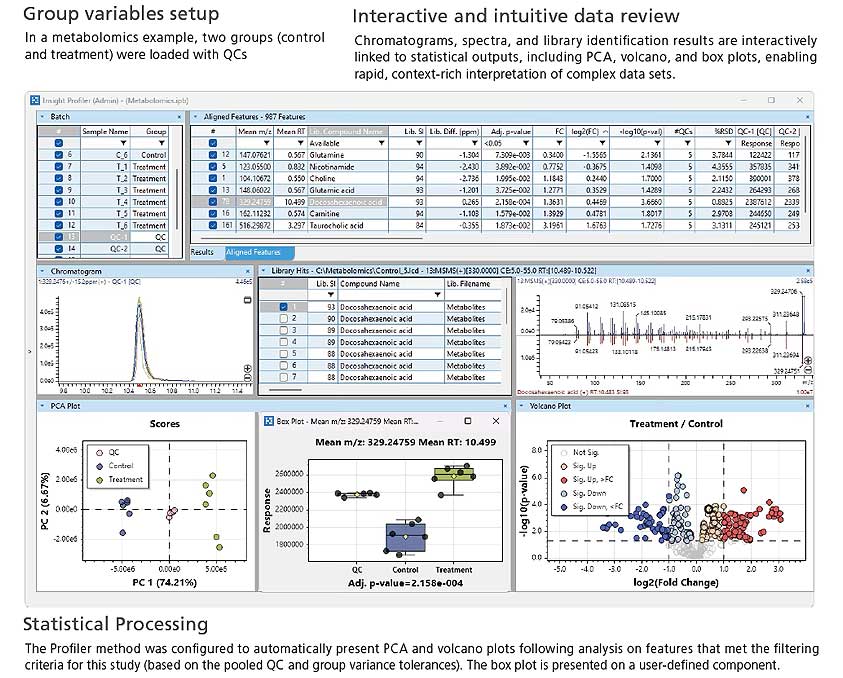
From environmental and forensic toxicology screening to extractables and leachables and metabolomics-based biomarker discovery, Insight Profiler's single-click processing methods bring the full power of untargeted LC/QTOF analysis within reach of any laboratory.
Requires LabSolutions LCMS Ver. 5.135 SP1 or later.
LabSolutions and LabSolutions Insight are trademarks of Shimadzu Corporation or its affiliated companies in Japan and/or other countries.
LabSolutions Insight Profiler, Non-Targeted Analysis Software for LC/QTOF Data has been released
LabSolutions Insight Profiler is a unified, end-to-end workflow for LC/QTOF data processing — with a "single-click" approach. Insight Profiler is purpose-built for non-targeted analysis in suspect screening, unknown identification, and metabolomics across complex sample sets.
Shimadzu has released the System Linkage Option
Data obtained with LabSolutions can be output in a variety of formats, and can be coordinated with a host system such as a laboratory information management system (LIMS).
LabSolutions Insight Environmental Option is now available
LabSolutions Insight Environmental Option is a software for the environmental regulatory field. In the environmental regulatory field, the quality control (hereinafter QC) requirements prescribed by the United State Environmental Protection Agency (EPA) must be satisfied.
Shimadzu has released the LabSolutions i-QLinks.
LabSolutions™ i-QLinks provides integrated control over the quality testing operations of an analytical laboratory, including the preparation of test plans and instructions, the incorporation of test results from analytical instruments such as HPLC, the automatic preparation of test reports from the incorporated test results, and the management of the quality test progress.
Shimadzu has released the LabSolutions Sync
Synchronizes Third-Party Software for Pretreatment Units with Shimadzu LC and LC-MS
Efficient Method Development by automated pH Screening with LabSolutions MD
This article describes an example of using LabSolutions MD, a dedicated software for supporting method development, to automate pH screening by varying the mobile phase pH from 2.5 to 8.5 to evaluate the optimal pH level for separating 12 small-molecule drugs.