


Levetiracetam
Molecular Formula: C8H14N2O2
Monoisotopic Mass (M): 170.1055
Detected Ion [M+H]+: 171.1


Shimadzu Chemistry & Diagnostics has been involved in the R&D of SIL compounds for over 20 years and offers expertise and know-how in the synthesis of stable isotope-labeled compounds such as SIL analogues, building blocks, metabolites, and reference standards.
Thanks to our wide catalog of products or our custom synthesis service, we provide the ideal compound you need to allow accurate results and improve your LC-MS/MS analytical method.
Our analytical department analyzes all our compounds using high-performance analytical instruments, such as NMR, HPLC, GC, and MS to ensure comprehensive quality for our customers and deliver a detailed certificate of analysis. To ensure the quality of our products, we ensure and control the whole process: from R&D and manufacturing to delivery.
Stable isotope-labeled standards (SIL standards) are commonly used internal MS standards for quantitative analysis by mass spectrometry. They are chemically similar to their non-labeled counterparts, except for the incorporation of stable isotopes such as deuterium (²H), carbon-13 (¹³C), nitrogen-15 (¹⁵N), or oxygen-18 (¹⁸O). Because SIL standards generally share similar physicochemical properties with the target analyte, they may undergo comparable extraction, separation, and ionization processes, which can help reduce variability during sample preparation and analysis. As a result, they may contribute to improved quantification and help minimize deviations associated with sample loss or instrument fluctuations.
| Category | Keywords |
|---|---|
| Stable Isotope Standards | Stable isotope labeled analytical standards, Internal standard, Deuterium labeled standards, Carbon 13 |
| Reference Standards | Pesticides references, Pharmaceutical reference standard, Pharmaceutical analytical testing, Method validation |
| Therapeutic Drug Monitoring (TDM) | TDM products |
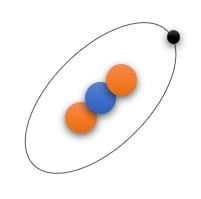
Isotopes: Atoms with the same atomic number (number of protons), but with different mass numbers (number of neutrons).
| Hydrogen (H) | Deuterium (2H or D) | Tritium (3H or T) | |
|---|---|---|---|
| Structure |
|
|
|
 |
|||
| Mass Number | 1 | 2 | 3 |
| Radioactivity | No | No (stable isotope) |
Yes (radioactive isotope) |
| Natural Abundance | 99.985% | 0.015% | Trace |
Water on Earth contains an average of about 150 ppm (150 µL per liter of water) deuterium (D2O).
| Element Symbol | H | C | N | O | |||||
|---|---|---|---|---|---|---|---|---|---|
| Mass / Natural Abundance (%) | 1.0078 2.0141 |
99.9885 0.0115 |
12.0000 13.0034 |
98.93 1.07 |
14.0031 15.0001 |
99.632 0.368 |
15.9949 16.9991 17.9991 |
99.757 0.038 0.205 |
|
| Element Symbol | S | Cl | Br | ||||||
| Mass / Natural Abundance (%) | 31.9721 32.9715 33.9679 35.9671 |
94.93 0.76 4.29 0.02 |
34.9867 36.9659 |
75.78 24.22 |
78.9183 80.9163 |
50.69 49.31 |
|||
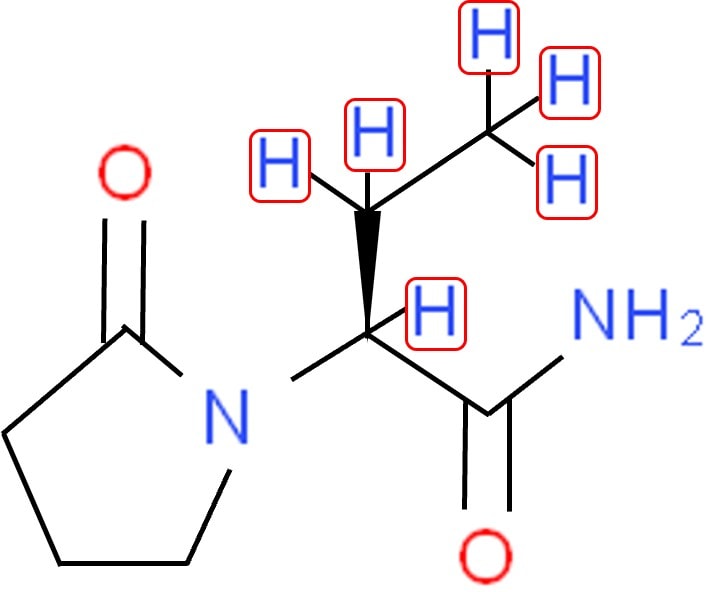
Levetiracetam → [2H6]-Levetiracetam (Levetiracetam-d6)
Levetiracetam
Molecular Formula: C8H14N2O2
Monoisotopic Mass (M): 170.1055
Detected Ion [M+H]+: 171.1
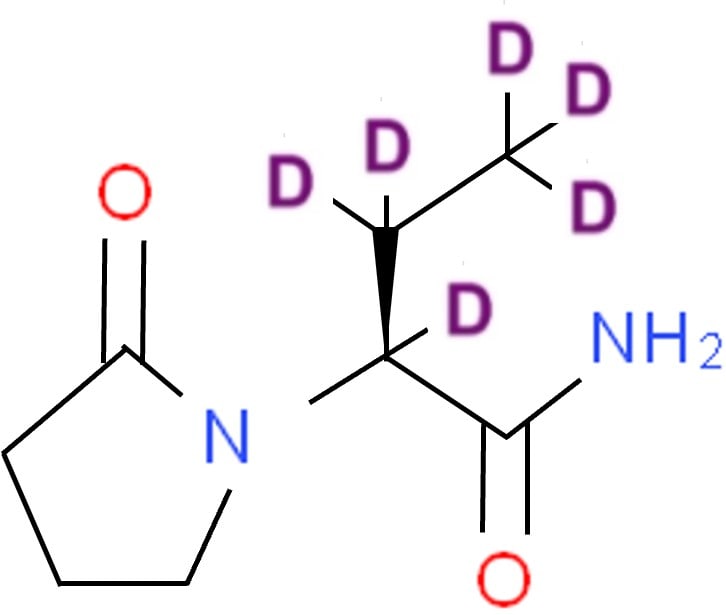
[²H₆]-Levetiracetam (Levetiracetam-d6)
Molecular Formula: C8H8D6N2O2
Monoisotopic Mass (M): 176.1432
Detected Ion [M+H]+: 177.1
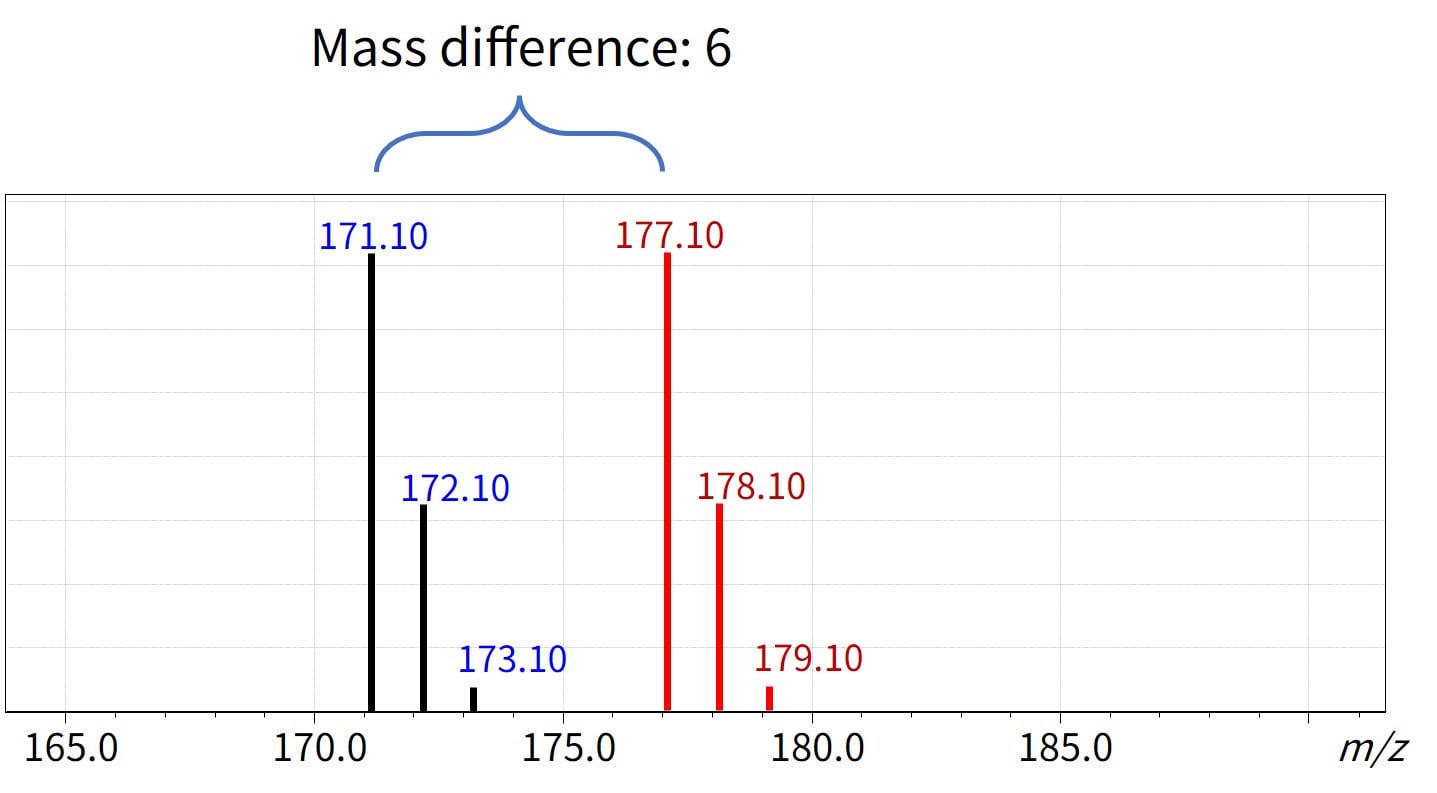
Mass Spectrum
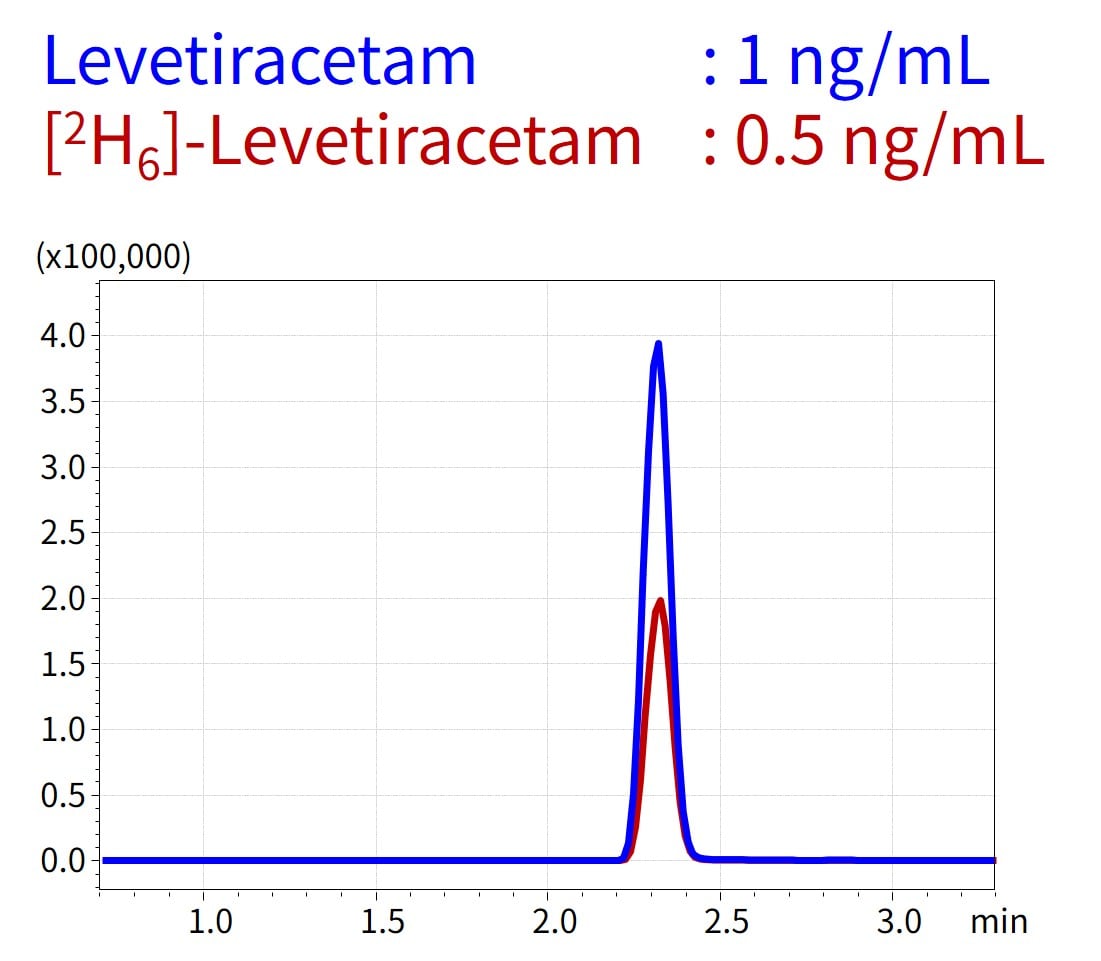
Mass Chromatogram
Our products are manufactured for research purposes only. Our products are not intended for human or animal use.
In our online catalog, some pre-defined options are proposed. If needed, any quantity starting from 1 mg (which is the minimum that can be ordered) to 10s of grams can be requested. Please contact sales@schd-shimadzu.com for any specific packaging needs.
An expiry date is specified on the certificate of analysis (COA) delivered along with our products. All of our products are delivered with a detailed certificate of analysis guaranteeing the purity and stability of our compounds for a minimum period of 1 year, as long as the storage and use conditions recommended by Shimadzu Chemistry & Diagnostics are respected. If your expiration date has been reached, please contact our team at : orders@schd-shimadzu.com for a reanalysis.
The Safety Data Sheet (SDS) gives important information about the product (the use, the hazard identification, etc.). At Shimadzu Chemistry & Diagnostics, each product is delivered with its corresponding SDS. When needed, it can be requested at hse@schd-shimadzu.com
All our products are delivered with a detailed and complete Certificate of Analysis (COA) which is shipped with the product. If needed, please contact us at sales@schd-shimadzu.com.
For nearly 20 years, Shimadzu Chemistry & Diagnostics has supported its customers around the world by providing customized organic compound synthesis for labeled and unlabeled compounds, from 1 mg to 10´s of grams (only product for RUO). Please complete the online form to tell us your specifications or contact our sales team at sales@schd-shimadzu.com
We can label compounds with stable isotopes like deuterium (2H, D), carbon-13 (13C), nitrogen-15 (15N ), oxygen-18 (18O ), and sulfur-34 (34S). Radioactive labelling is not available at Shimadzu Chemistry & Diagnostics (e.g. 14C, 3H or 125I).