Nexera XS inert


- Short chain oligonucleotides can be separated based on the base unit. - Oligonucleotides can be separated from impurities such as protecting groups used in the chemical synthesis process. - By controlling pH changes in the mobile phase, robust analytical results can be obtained.
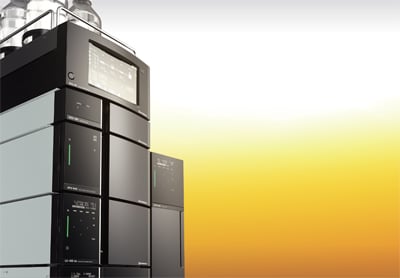
Nucleic acid drugs, such as antisense oligonucleotides, exert their efficacy by interacting with target genes inside and outside cells. Unlike conventional small molecule drugs, they are capable of targeting disease causes at the genetic level and are attracting attention as a next-generation drug. Nucleic acid drugs are mainly produced through chemical synthesis, but the synthesis process also produces many impurities such as shorter length components and protecting groups, so proper separation and purification of the target oligonucleotide is required. In this article, we introduce an analytical method for the separation of oligonucleotides of different length by ion- exchange chromatography, assuming that shorter length components are impurities derived from the synthesis process. In order to achieve optimal analytical performances an inert UHPLC system was used. The Nexera XS inert, which is designed to suppress the adsorption of metal-coordinating compounds containing phosphate groups. We also report the effect of changes in mobile phase pH on analytical results.
February 2, 2022 GMT