



There is More than One Way into Science:
Shimadzu Takes Part in Three Science Events
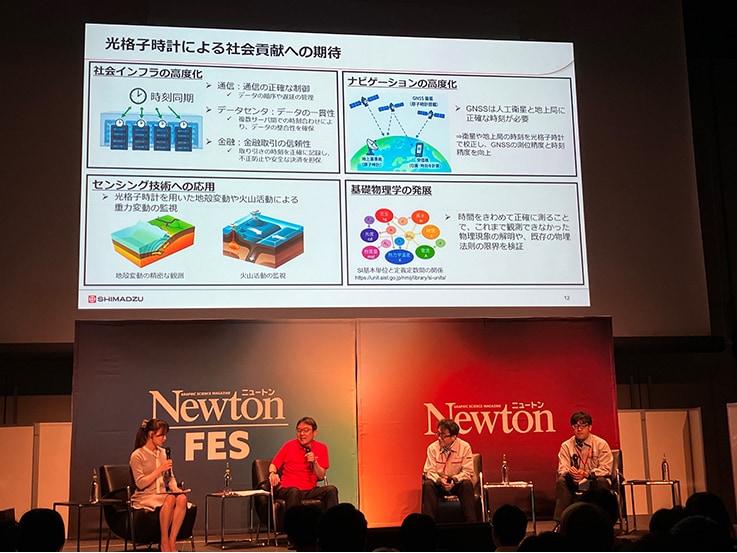
People become interested in science in different ways. In September 2026, Shimadzu Corporation took part in three science events: Newton FES, Science Agora 2026, and Science Fes 2026 in Oita. The events ranged from a showcase of cutting-edge science to hands-on experiments and activities rooted in the local community, all designed to bring the excitement of science to a wider audience.
Getting Up Close with Cutting-Edge Science
For science enthusiasts in Japan, Newton is a magazine they cannot resist picking up. Newton FES, the magazine’s first-ever event, took place at Shibuya Hikarie in Tokyo on September 25 and 26.
The event featured company exhibits, demonstrations using actual instruments, lectures, and talk sessions with leading researchers and other prominent figures in science. More than 2,000 science enthusiasts attended, including university students studying science and engineering and high school students.
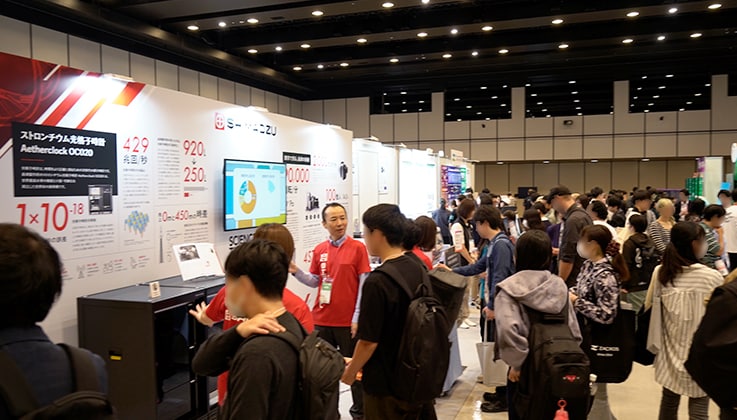
At the Shimadzu booth, we introduced the technologies behind our products using “Numbers” as a key theme. One of the main attractions was an optical lattice clock, a technology that could one day change how the second is defined.
The optical lattice clock was developed by Professor Hidetoshi Katori of the University of Tokyo’s Graduate School of Engineering. The strontium optical lattice clock (Aetherclock OC020) achieves world-leading accuracy, with an error of just one second over 10 billion years. Shimadzu is collaborating with Professor Katori and his research team to develop a smaller, portable version for practical use.
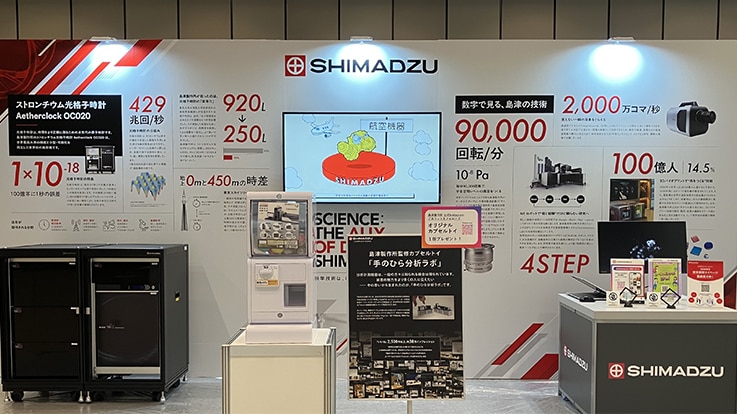
From left: A life-size model of an optical lattice clock, capsule toys featuring analytical instruments, and actual diffraction gratings
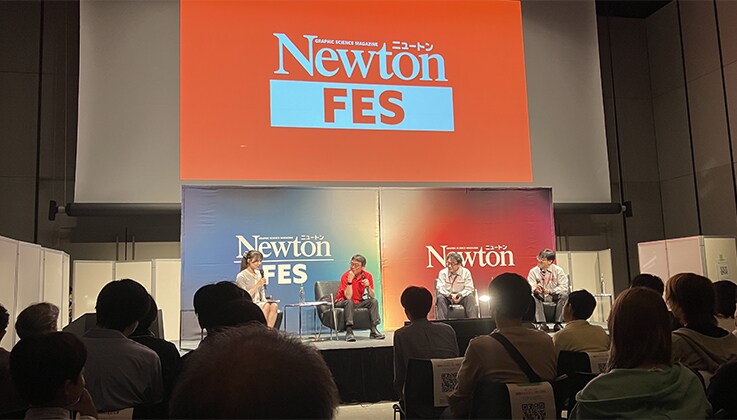
At a corporate session moderated by Saki Okamoto (Graduate Student, The University of Tokyo), Newton Editor-in-Chief Ryu Itakura discussed “Could the Definition of One Second Change? Optical Lattice Clocks” with Tetsuo Furumiya and Takashi Muramatsu of Shimadzu’s Technology Research Laboratory. (Watch the archived session here. Japanese only)
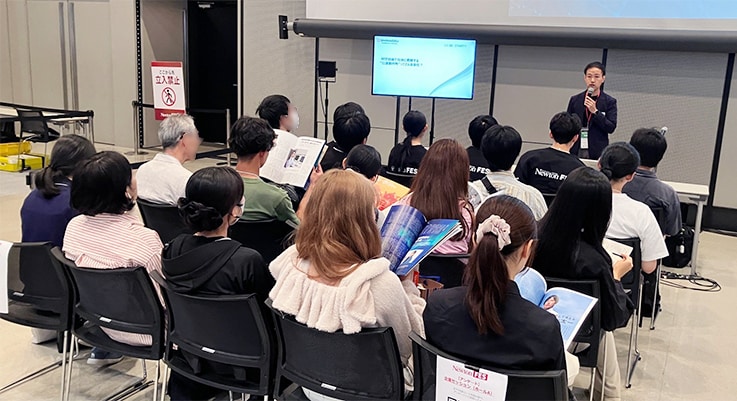
A career session highlighted the opportunities open to students with a background in science
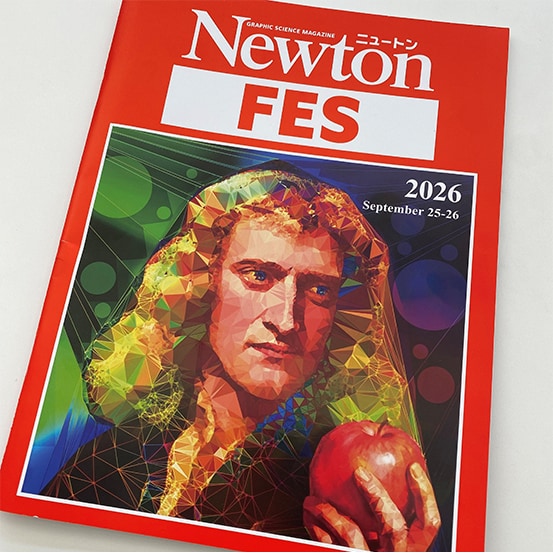
A special-edition booklet available only at the event. (Click here for a special feature with Shimadzu engineers. Japanese only)
Predict, Experiment, and Discover through Hands-On Science
Science Agora 2026, held on September 12 and 13 at the Telecom Center Building in Odaiba, Tokyo, explored the future of science, technology, and society. Over the two-day event, about 5,000 people attended.
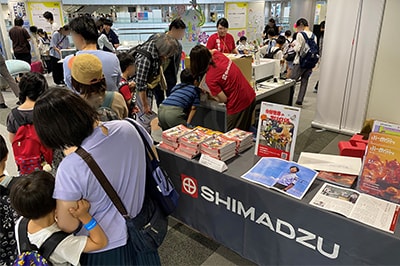

The theme of the Shimadzu booth was “Which Liquids Glow under Ultraviolet Light?” Inspired by Science Survival Manga, a popular science manga series, Shimadzu created a hands-on experience based on its original booklet Survival with Analysis. It also gave away 1,000 copies of the booklet, giving visitors another way to connect with science.
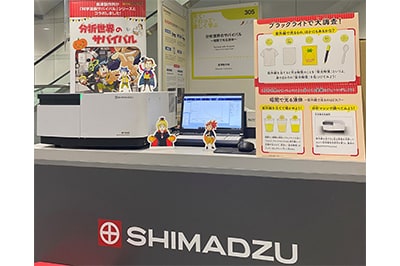
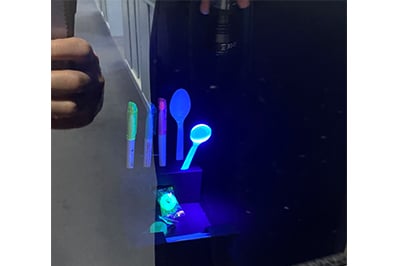
Visitors first predicted the results, then carried out experiments to test their predictions. They then used a fluorescence spectrophotometer (RF-6000) to detect fluorescent substances invisible to the naked eye. The activities gave visitors a fun of analytical science, showing how interesting it can be and how it can be applied in many different situations.
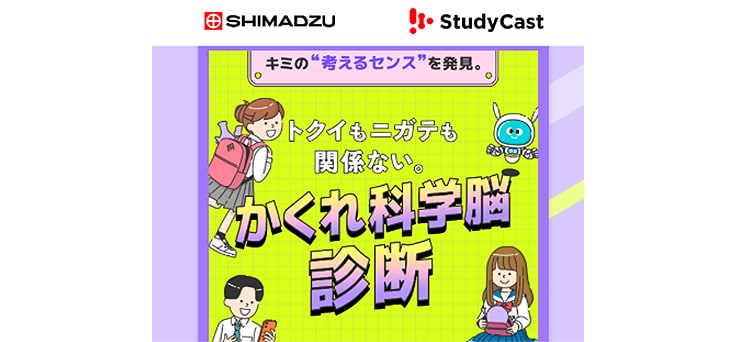
At these science events, Shimadzu also introduced the Hidden Science Brain Quiz (Japanese only), offering another way to discover how science relates to their everyday lives. This web-based type assessment was created in collaboration with Shimadzu and StudyCast, a learning app offered by Benesse Corporation, a major education company. Users answer a series of questions to find out which of ten “science brain” types best fits them. The results map out their thinking styles, show which other types they may connect with through a “science/chemistry reaction,” and can be shared with others.
Discovering Measurement in the Local Community
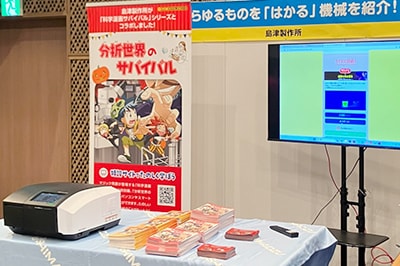
Science Fes 2026 in Oita, held on September 19 and 20 at J:COM Hall Oita, is a hands-on event where parents and children can enjoy science together. Measurements can reveal differences between everyday objects that are not visible to the naked eye. At the Shimadzu booth, children explored the science of measurement through quizzes using the spectrophotometer (UV-1900 iPlus).
Comment from an Event Team Member
Each of these three events offered visitors a different way to experience and enjoy science.
Guided by our corporate philosophy of “Contributing to Society through Science and Technology,” Shimadzu does more than develop new technologies. We also work to share the excitement of science and technology and give younger generations more opportunities to discover them.
We hope these experiences will also inspire young people to take an interest in careers that support scientific research and technological development.
 Page Title and URL Copied.