
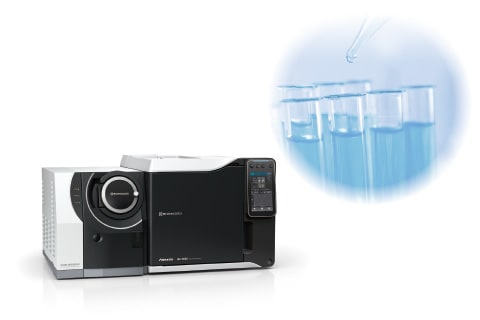
Smart Metabolites Database™ Ver.2


Gas Chromatograph Mass Spectrometer
Taste evaluation of food is an extremely important factor for food product development and quality evaluation. While there is a relationship between the taste of a food item and its components to a certain extent, simple one-to-one relationships between a component and a taste are rare, with generally multiple components complexly affecting the taste. In some cases, this makes it difficult to improve and evaluate the quality of a food product based on component measurement. Against this backdrop, in recent years the food and other industries are increasingly showing interest in performing regression analysis on the results of sensory evaluations through the comprehensive analysis of metabolites. One comprehensive analysis method which is expected to become an extremely useful tool for such analyses is widely targeted metabolomics. Enabling favorable peak identification, it allows examination of components that contribute to taste after the construction of a model from sensory evaluation results. Eight types of coffee beans were ground, roasted, and extracted under the same conditions and subjected to sensory evaluation. Metabolites were then extracted from each coffee bean type and measured using GC-MS/MS analysis. Using the results of the sensory evaluation as response variables and the processed values of the detected peak areas of metabolites as explanatory variables, a partial least squares (PLS) regression model of the relationship between these variables was constructed. The components that affect the taste were then examined using the results of the PLS regression model.
February 27, 2018 GMT