
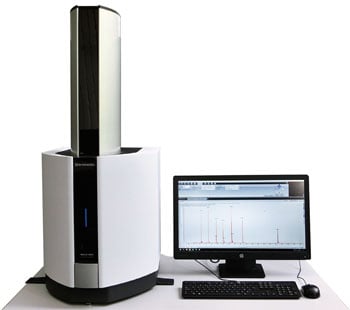
MALDI-8020


MALDI-TOF Mass Spectrometry
Many protein-based biopharmaceutical products are synthesized in cultured cells derived from eukaryotes. For this reason, the synthesized proteins are mainly glycoproteins which comprise proteins with glycans linked to them. The glycans in these glycoproteins are broadly divided into N-linked glycans (N-glycans) and O-linked glycans (O-glycans), each having diverse and complex branching structures. The structure of the glycan is known to affect the function and stability of the glycoprotein. Therefore, if the structure of the glycan in a synthesized glycoprotein changes, due to changes in the culture environment for example, there may be unexpected changes in the function and stability of the glycoprotein itself. This possibility can lead to serious problems in the development and manufacture of biopharmaceutical products, and therefore monitoring whether the glycan structure has changed or not is a primary element in managing quality. It is important to correctly analyze and evaluate changes in glycan structure, but there are a variety of pretreatment methods for glycan analysis and they are not standardized, so the result of analysis of the same glycoprotein may differ if different pretreatment methods are used. This article introduces the results of comparing some of the pretreatment methods widely used in N-glycan analysis and investigating how they affect the analysis results.
June 29, 2018 GMT