TOC-L Series


Total Organic Carbon Analysis
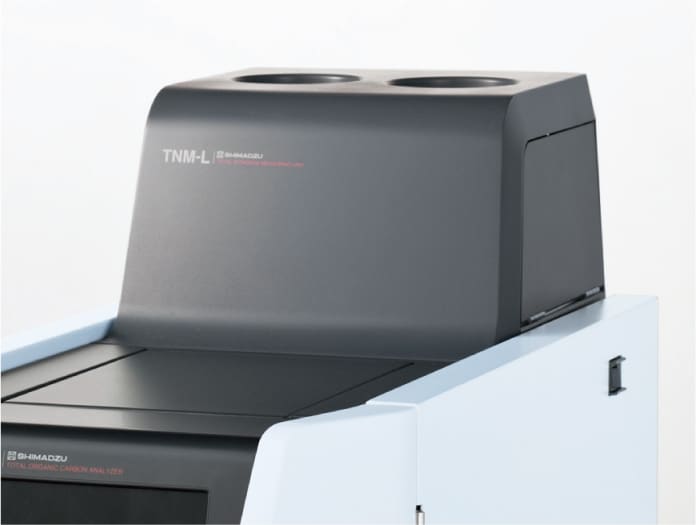
In thermal power stations, a denitration system is installed to remove nitrogen oxides (NOx), which are harmful substances, contained in flue gas in order to protect the environment. A denitration system decomposes NOx into nitrogen and water to reduce atmosphere pollution by adding dry ammonia, aqueous ammonia or urea solution as a reducing agent to the flue gas. Of the reducing agents, urea is easy to handle and does not require effluent treatment, making it possible to use the agent at a low cost. In order for the denitration system to efficiently decompose emitted NOx, the urea must constantly be adjusted to an optimum concentration. A low concentration may result in insufficient decomposition but a high concentration may cause an ammonia slip, resulting in the release of harmful ammonia outside of the system. Quality control for urea solution is possible by measuring the total nitrogen (TN). Also, the NOx removal efficiency can be checked by continuously measuring the NOx concentration at the exit of the denitration system, which contributes to the optimization of the entire system operation. Shimadzu's combustion method total organic carbon analyzers (TOC-L: laboratory analyzer; TOC-4200: on-line analyzer) can easily measure TN by combining a TN measurement option. If using the Kjeldahl method, which is widely used to measure nitrogen content, multiple reagents such as acids and alkalis are required and the measurement takes several hours for digestion and distillation. The TN measurement option for these analyzers, on the other hand, uses the thermal decomposition - chemiluminescence method. Therefore, reagents are not necessary and measurement results can be obtained rapidly in approxi. 5 minutes. The measurement of the NOx concentration in the flue gas is possible by using the NOA-7100 transportable gas analyzer. All pretreatment components required for measurement, such as the pump, filter, and electric cooler, are built-in the NOA-7100, so NOx concentrations can be measured in real time by simply introducing the sample gas into the sample gas inlet port. In addition, if using a model equipped with a Wi-Fi function, measurement trend data can be viewed at a location away from the analyzer. By using a total organic carbon analyzer together with the NOA-7100, the quality of aqueous urea solutions and the NOx removal efficiency can be monitored continuously to enable acquisition of data that can be used to optimize the operation efficiency of the entire system. This article introduces example measurements of urea solution using a system comprising Shimadzu's TOC-L and optional TNM-L total nitrogen unit.
May 28, 2018 GMT