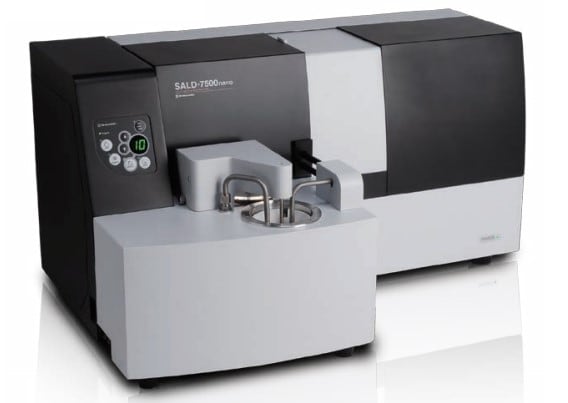
SALD-7500nano


Powder Property Analys
Cellulose is a polysaccharide that is the main component of plant cell walls. The cellulose fibers called nanocellulose are produced by defibrating cellulose fibers. Nanocellulose fibers having a width of 4 nm to 100 nm, length of several μm or longer, and a high aspect ratio (100 or more) are generally called cellulose nanofibers (CNF). In addition to CNF produced from plant fibers, CNF also includes nano-fibrillated bacterial cellulose which is produced by cellulose synthesis bacteria (NFBC; also called fermented nanocellulose). CNF is a high-performance material with a variety of desirable properties, including light weight, high strength, low thermal expansion, a high gas barrier, absorption, thickening performance, and transparency. Moreover, as a plant-derived material, CNF is also a sustainable, low environmental load resource. Future application in various fields is expected, beginning with automotive components and electronic materials. However, the lack of adequate techniques for evaluating the physical properties of CNF is an issue. The physical properties of CNF are known to be related to the fiber length and diameter, which are currently measured mainly with a microscope. Although accurate microscopic measurement is possible because the fibers are measured individually, this is a time-consuming process. Furthermore, microscopic measurements are generally carried out after drying the specimen material, and the measurement results may be different from those in the water-dispersed state. Therefore, a quick, simple method for characterization of the fiber length and dispersibility of CNF in the water-dispersed state has been desired. This article introduces an example of characterization of the fiber length and dispersibility of various CNF by using Shimadzu’s high sensitivity model SALD- 7500nano nano particle size analyzer.
June 18, 2019 GMT