Engineering Materials


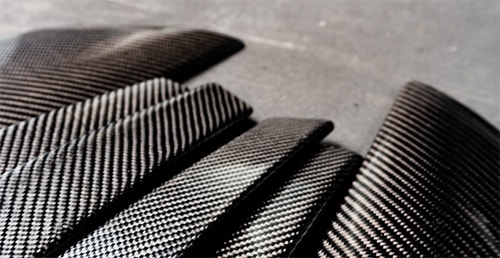
Fiber reinforced plastics (FRP) have higher mechanical properties per unit weight than metal materials such as steel and aluminum and therefore are used now as substitute materials for metals in a variety of industrial products. Particularly in recent years, high quality carbon fibers, resin-impregnated prepregs containing those fibers, and advanced molding technologies have been developed. As a result, FRP has now gained wide acceptance and has an extensive record of actual use, and is also beginning to be used in main structural parts of aircraft and automobiles, in which high reliability is essential. However, in the case of carbon fiber reinforced plastic (CFRP), which consists of carbon fiber and resin, in combination with the existence of adhesive interfaces, the failure process also has an extremely complex mechanism. Moreover, discontinuous CFRP fiber sheets, in which the fibers are cut to a certain length and laminated as shown in Fig. 1, are used in practical applications to improve formability, but while this dramatically improves freedom in shape design, the dynamic mechanism is also more complex. Because recent carbon fiber composite materials have higher formability and performance, application to a wide range of industrial products is expected. Considering the high level of interest in this material, it seems possible to say that active research is underway, but at present, elucidation of the dynamic mechanism in order to explain reliability theoretically/quantitatively is still considered insufficient. The key technologies for this are a visualization technology for exact observation of the phenomena and a measurement technology which makes it possible to measure dynamic properties while reproducing the actual environment. Recently, progress in analytical and measurement technologies is continuing to clarify phenomena and behaviors that were unclear in the past. If it is possible to elucidate the dynamic mechanism of high performance materials with future potential by actively utilizing these analytical/measuring technologies, feedback to product design will be possible, reliability design that satisfies specifications can be realized, and this in turn will contribute to the wider use/expansion of new materials. The bending test is a simple method for measuring mechanical characteristics and has been standardized in standards 1). Since the test operation is simple and the test can be performed with a comparatively small-sized compact testing machine, this method is frequently used in the field of composite materials. However, due to the anisotropy of the material, a singular stress field occurs around the point of contact between the test piece and the indenter, which is the point where force is applied. The results also depend on conditions such as the material thickness and the distance between fulcrums, and care is necessary in treating the obtained strength evaluation value, particularly when failure occurs on the compressive side. In addition, in practical applications, the phenomenon of failure under bending deformation by a contacting object frequently occurs. Thus, an understanding of the phenomenon and mutually complementary verification of how bending failure progresses and what process and logic should be employed when determining the design stress of strength are required.
July 9, 2026 GMT