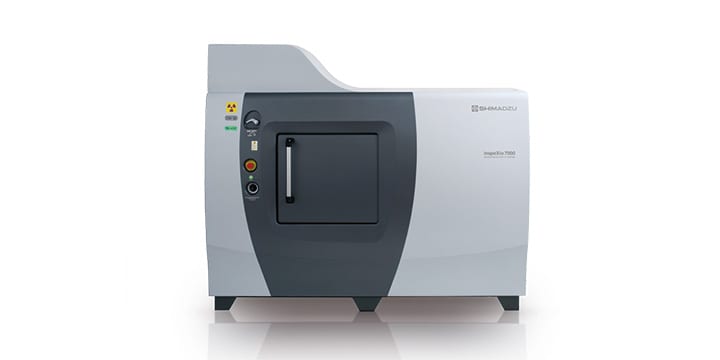
inspeXio™ 7000


Use of Carbon Fiber Reinforced Plastics (CFRP) and other composite materials in transportation equipment, beginning with automobiles, has begun in response to calls for reduction of body weight to reduce environmental impacts. Unlike metal materials, composite materials have a complex internal structure and display complex fracture behavior, depending on the principal axis of applied stress, and this has made it difficult to establish highly accurate structural analysis models. Structural analysis simulation techniques such as CAE (Computer Aided Engineering) are widely used in design development of transportation equipment. Improved reproducibility of CAE analysis is expected to increase efficiency and reduce costs in development work, and to improve the reliability of the designs of complex structures and large-scale structures, which is difficult to assess by actual measurement. In conventional product design development, there was a time when design work was considered complete with only CAE analysis. Today, however, actual measurement under the same conditions as the CAE analysis model and verification by comparison of those results and the CAE analysis results to validate the appropriateness of the simulation results (V&V: Verification and Validation) is considered important. As a result, product design utilizing both actual measurement and CAE analysis is becoming a general social requirement. This article presents an outline of the distinctive features of composite materials related to CAE analysis, and based thereon, introduces examples of V&V by comparison of the CAE analysis results with the results of actual measurements of a Carbon Fiber Reinforced Thermo Plastics (CFRTP) fabric material.
March 19, 2020 GMT