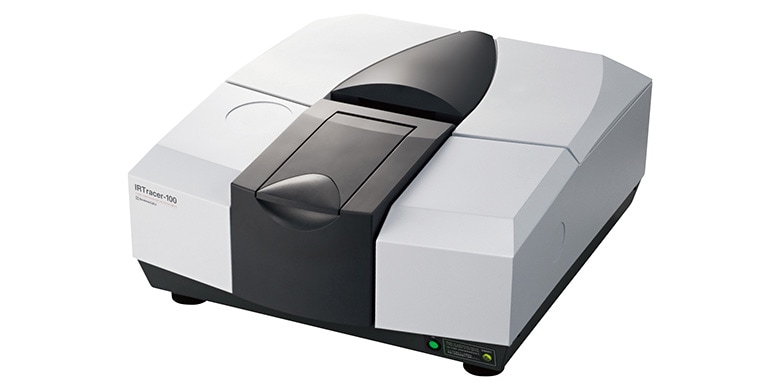
IRTracer-100


In daily life, we encounter a variety of natural products and manufactured goods. In fields such as food products, pharmaceuticals, and machinery, effort is put into quality assurance, striving to prevent the incorporation of contaminants. However, the incorporation of contaminants does inadvertently occur due to unforeseen factors and problems. While there are many types of contaminants, the plastic parts used in production line, specific environments, and the vicinity become brittle due to aging and thermal degradation, making their incorporation in part a possibility. FTIR is optimal for the analysis of such plastic contaminants. However, the infrared spectrum of degraded plastic differs from the spectral pattern before degradation. Accordingly, in searches using commercially available plastics libraries, even if a search result has top ranking, it can inadvertently consist of the spectral pattern for a different substance, making identification and qualification difficult. In this article, we introduce an example of the changes to the infrared spectrum of a plastic degraded by heat, and a sample search using a library containing data created by changing the heating temperature and time beforehand.
April 8, 2016 GMT