
Engineering Materials


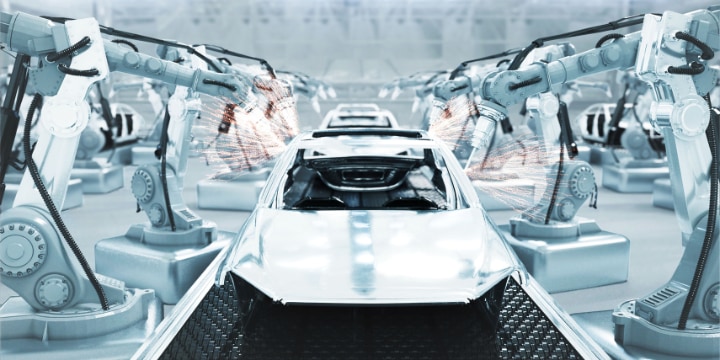
Automobiles have become an indispensable part of our daily lives, but in recent years, application of various materials such as carbon fiber reinforced plastic and high tensile strength steel has been studied with the aim of reducing auto body weight in order to improve fuel economy and reduce CO2 emissions, and many such materials have been applied practically. However, the required material properties differ in each automotive component. In particular, materials with high dent resistance, i.e., resistance to depressions caused by impact by small stones or other objects that bounce up during travel, is demanded in doors, hoods, and other outer panels. Increasing the contents of carbon and nitrogen to increase yield strength are effective for improving dent resistance, but press forming becomes difficult, and the forming defect called “surface deflection” increases. On the other hand, in order to improve formability and secure high surface accuracy, soft materials with low yield strength are required. Bake-hardening steel sheets (BH steel sheets) are used to satisfy the mutually-contradictory requirements of high formability and high dent resistance. BH steel sheets are a type of steel sheet that is soft and has high formability at the time of forming, and then hardens when dried with heat (baked) in the subsequent painting process. This article introduces an example in which tests were conducted in accordance with JIS G 3135 Annex A in order to obtain the paint bake-hardening amount (BH amount) of SPCC, SPFC590, and SPFC1180 steels.
September 10, 2019 GMT