
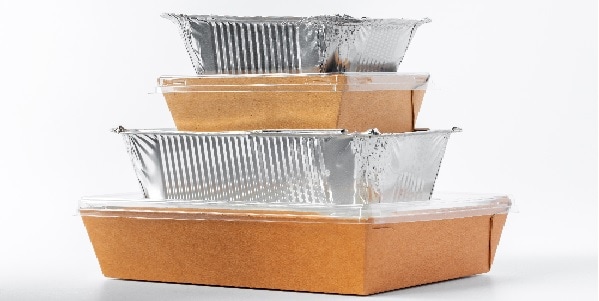
Food Contact Materials (FCM)


- Automatic generation of multi-point calibration curves from a single standard is possible. - Automatic measurements of samples with concentrations from 1/10 to several times the standard values for leaching are possible.
Polyethylene terephthalate (PET) has excellent heat resistance and toughness, and is widely used in bottles, tray, packs, and other products. On the other hand, because antimony (Sb) or germanium (Ge) compounds are used as polymerization catalysts in the PET manufacturing process, these elements may remain in the PET. For this reason, Japan’s Food Sanitation Act sets Sb and Ge leaching standards for implements, containers, and packaging materials made of synthetic resins consisting mainly of PET. The standard values are no more than 50 μg/L (ppb) for Sb and 100 μg/L (ppb) for Ge as the concentration in the eluate. Although measurement methods include atomic absorption spectrometry, ICP atomic emission spectrometry, and ICP mass spectrometry, this article introduces an example of measurement using the graphite furnace atomic absorption spectrophotometry (GF-AAS) (electrical heating atomic absorption method), which can measure samples with high sensitivity. The graphite furnace atomic absorption spectrophotometry (GF-AAS) makes it possible to measure concentrations as low as 1/10 of the standard values without sample concentration. Moreover, use of the auto dilution function of a Shimadzu autosampler enables automatic generation of multi-point calibration curves from a single standard and automatic dilution and reanalysis of samples that exceed the set standard values.
March 4, 2021 GMT
