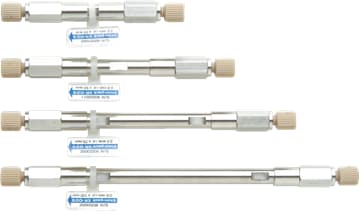
Shim-pack XR Series


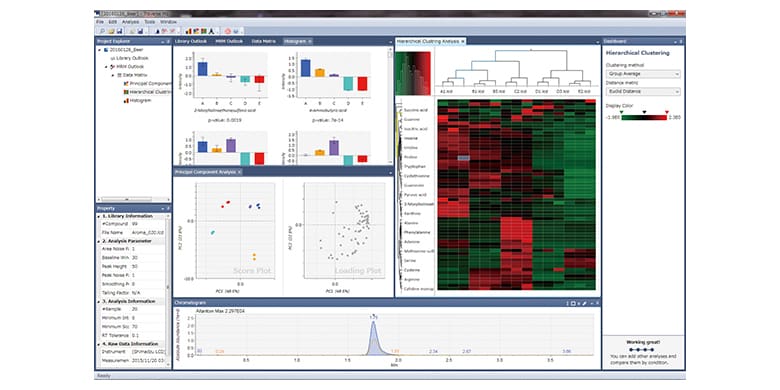
- Eight catechins and four theaflavins in tea can be analyzed simultaneously. - Complicated sample preparation is not necessary, as preparation requires only filtration with a membrane filter followed by dilution. - Multivariate analysis can be performed easily with Traverse MSTM software.
Tea, which can be purchased easily and contains a large amount of polyphenol, has attracted attention as a functional food with expected effects such as anticancer activity, prevention of dementia, and antiviral action. Catechins are compounds which are particularly contained in green tea leaves and include epicatechin (EC), epigallocatechin (EGC), epicatechin gallate (ECG), and epigallocatechin gallate (EGCG). By heating treatment, these compounds transform into catechin (C), gallocatechin (GC), catechin gallate (CG), and gallocatechin gallate (GCG). In the fermentation process, catechins also react with enzymes contained in tea leaves to form four types of theaflavins, depending on combination of catechins. These are theaflavin (TF1), theaflavin-3-gallate (TF2A), theaflavin-3’-gallate (TF2B), and theaflavin-3,3’-digallate (TF3). This article introduces an example of a simultaneous analysis of 8 catechins and 4 theaflavins in several types of commercially-available PET- bottled tea beverages using a triple quadrupole mass spectrometer LCMS-8050 with Shim-packTM XR-ODS III column using a simple sample pretreatment procedure. In addition, the results of green teas were conducted multivariate analysis.
September 24, 2021 GMT