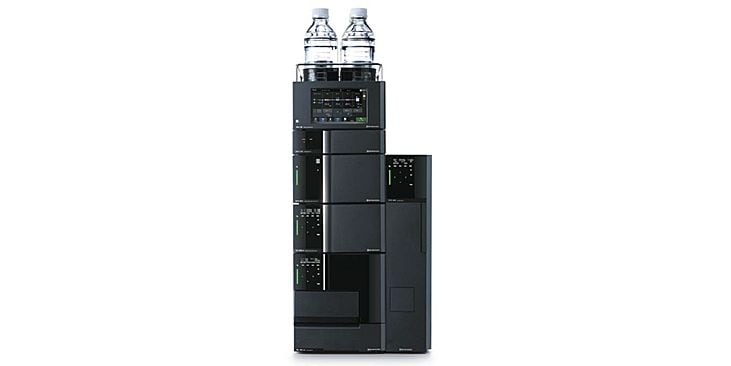
Nexera Series Ultra High Performance Liquid Chromatograph


- Shimadzu Nexera UHPLC system provides a robust platform for charge variant analysis in biopharma industry. - Shim-packTM Bio IEX columns offers excellent reproducibility and resolution between charge variants of mAbs biotherapeutics.
Overview: Monoclonal antibodies (mAbs) are the most approved biopharmaceuticals used to treat severe and chronic diseases such as cancer, autoimmune, cardiovascular, respiratory, hematology, and several infections. They have an enormous therapeutic and commercial value which makes them among the top 10 best sellers of pharmaceuticals for several past years. In recent years, the use of mAbs has been expanded due to significant advances in design thus decreasing immunogenicity in humans, improving their bioavailability, and specific affinity for antigen-binding. The complexity of mAb with about 150 kDa molecular weight implements the use of quality by design (QbD) as an unavoidable strategy for the development and manufacturing of these molecules. QbD defines the critical quality attributes and a control strategy to assure stable and consistent quality during the manufacturing process. Different post-translational modifications during the upstream process such as amino or carboxy-terminal processing and glycosylation or during downstream processes or storage, such as deamidation, oxidation, and fragmentation will end to different charge variants which could affect the safety, quality, and efficacy of mAbs. Therefore, characterization and quantification of mAbs charge variants are required for assessing consistent product quality. Methods of mAb Charge variant analysis: Analytical methods with the capability to separate differently charged molecules are used to characterize the variants of mAbs. Charge-based variants have been categorized as acidic, main, and basic species. Chromatographic and electrophoretic tools include ion- exchange chromatography (IEX) and isoelectric focusing (IEF), which are the most common and simple analytical methods for the analysis of mAbs charge heterogeneities. IEF may be used for visualizing the charge isoforms, but chromatographic tools are more appropriate for precise quantification. Cation exchange chromatography (CEX) has been a standard method for the characterization of mAbs charge heterogeneity and is routinely used as a fingerprint of the distribution of posttranslational modifications present on the mAb. Also, CEX analysis is necessary for mAbs quality control analysis and is requested by regulatory agencies. There are two major mechanisms involved in CEX of mAbs charge variants namely salt gradient and pH gradient. In salt gradient elution, mAbs charge variants are pushed down the column from exchange site by competing with the salt ions in mobile phase. With pH gradient elution, mAbs charge variants will elute from the column when the pH reaches the point where they have little to no charge The most common method for charge variant analysis still use a salt elution mechanism. Because of this, we investigated the robustness of this method. The control of pH during chromatography is of high importance to keep the retention times stable and the method robust. The ion exchange column itself will have an inherent buffering capacity which controls the pH during analysis. The degree of buffering a column is related to the exact column capacity and the type of charged group bound to the resin. In this study, we describe a salt-gradient method having common gradient program for separating the charge variants of all the four mAbs namely trastuzumab, omalizumab, rituximab and cetuximab using Shimadzu Nexera XS and a Shim-pack Bio IEX column.
October 15, 2026 GMT
Some products may be updated to newer models