MCT Series


- The deformation strength can be calculated by performing compression tests on anode material one particle at a time. - This provides a useful method for correctly analyzing the physical properties of particulate material, without being affected by the experience of the analyst. - This provides an index for evaluation of strength, for development of new anode materials.
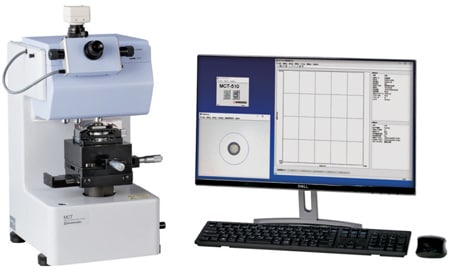
Lithium-ion batteries are a type of rechargeable battery that is charged or discharged by desorption or insertion of lithium ions (Li+) from or into the active material structure. In recent years, the uses of lithium-ion batteries have expanded dramatically, and research to increase their capacity, extend their life, reduce their cost, and increase their safety is being actively undertaken. The main materials of lithium-ion batteries are the cathode, anode, separator, and electrolytic solution, with the active material, the main material from which the electrodes are composed, being the most important element for improving performance. In recent years the use of silicon and metal oxides as anode materials has been investigated. Silicon anodes have a higher theoretical capacity than conventional carbon anode materials, so they are expected to contribute to higher capacity lithium-ion batteries. On the other hand, charging and discharging can easily be accompanied by volumetric expansion and contraction, so there is the issue that aging of the battery itself is faster compared with carbon anode materials. Hence evaluation of the properties of new materials is required in order to improve the performance of anode materials. In this article a case of measurement of deformation strength in compression tests is introduced, as an example of quantitative evaluation of physical properties. The MCT-510 micro compression testing machine is used for compression tests on minute samples and can be applied to flexible anode materials. The deformation strength is quantitatively evaluated by high-accuracy measurement of both displacement and force.
January 6, 2022 GMT