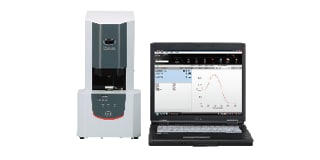
BioSpec-nano


- Micro sample quantities as small as 1 to 2 μL can be measured without using a cell. - The software can calculate the molar absorption coefficient at 280 nm (ε280) by entering the number of tryptophan, tyrosine, and cysteine residues in the amino acid sequence of sample. - Simply drop the sample and press [Start] to start the measurement. The automatic wiping function makes it easy to successively measure a series of samples.
Protein solutions contain various coexisting substances, such as surfactants, reducing agents, and denaturants, which affect quantitative analysis results. Therefore, it is necessary to select an appropriate method for each sample. UV absorption (optical density (OD) at 280 nm) is the simplest way to quantitate the total protein concentration using spectrophotometry. This technique, which is based on the 280 nm UV absorption by aromatic amino acids present in proteins, requires no pretreatment and has easy analysis operations. However, absorbance can differ depending on the type of protein, even for the same concentration, and the presence of light-absorbing substances in the same region, such as nucleic acids, prevents quantitation. In contrast, the bicinchoninic acid (BCA) method is a quantitative method that involves small chromogenic differences between different proteins. The method is based on the principle that Cu(I) ions generated in the presence of proteins turn a violet color when they form coordinate bonds with bicinchoninic acid, and is known to offer high sensitivity over a wide concentration range. Thus, although there are various quantitative methods for proteins, it is required to quantify proteins more simply and in smaller amount in the production of biopharmaceuricals. This article describes an example in which immunoglobulin (IgG) was determined by two methods of OD 280 nm method and BCA method using a BioSpec-nano capable of measuring a micro sample of about 1 to 2 μL.
March 1, 2022 GMT