
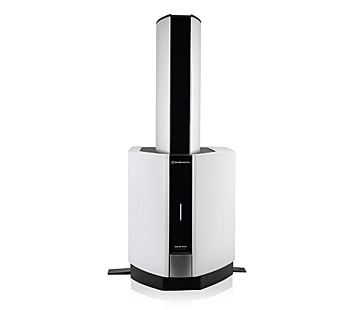
MALDI-8030


- Simple easy analysis of sulfonated azo dyes on an affordable benchtop MALDI-TOF - Quality spectra with good resolution and accuracy in negative ion mode - Workflow useful for detecting regulated colourants in food
Synthetic colourants are a type of additive that are widely used in food, pharmaceutical and cosmetics manufacturing. In foods, colourants are used to: i) make food more attractive and appetizing; ii) provide or enhance colours already present; iii) correct natural variations in colour. Among them, sulfonated azo dyes are popular because of their stability, solubility in water and low cost. Colourants are subject to stringent regulations by different bodies around the world over their safety and adverse effects on human health. For example, in the United States (US), the FDA is responsible for the approval of colourants for use in foods, drugs and cosmetics, while in Europe they are regulated by the European Food Safety Authority. Among the various approved food colourants, there are some which have been flagged following scientific research, over a possible link to attention deficit hyperactivity disorders (ADHD) in children: Sunset Yellow FCF (E110), Tartrazine (E102) and Allura Red AC (E129). While these dyes have not been completely banned in the EU, food manufacturers are required to apply warning labels on products containing the dyes of concern. Here, we demonstrate the capability of the dual polarity MALDI- 8030 benchtop linear MALDI-TOF mass spectrometer to detect the presence of sulfonated azo colourants in commercial sweets/candies, known to contain these colourants. The dyes are selectively extracted via ion-pair extraction, and analysed in negative ion mode.
April 5, 2022 GMT