
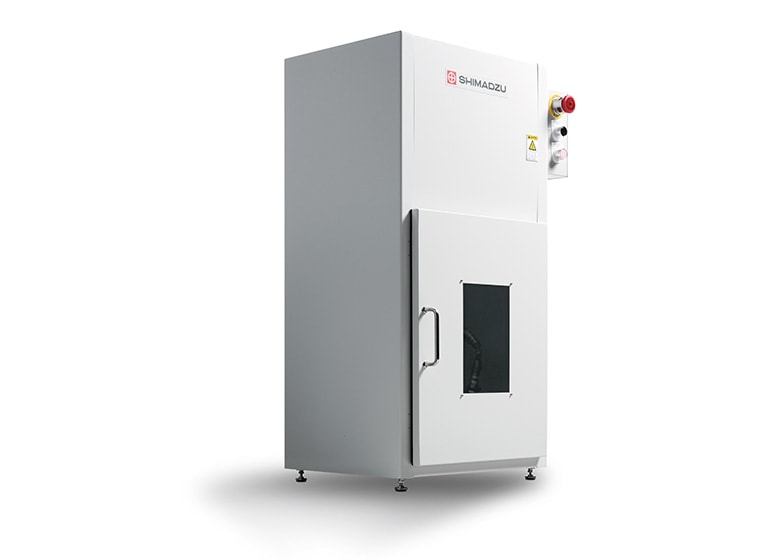
USF-2000A


Currently, research is focusing on the reliability of materials and structures. In comparison to other methods of metal additive manufacturing (AM), selective laser melting (SLM) is an efficient powder bed-based metal AM technology. To estimate the required quality of SLM components, fatigue-related problems must be investigated. Aluminum is used in a broad number of applications, the most notable of which are in the automotive and aerospace industries. Aluminum-silicon alloys are well-established in SLM processing, with AlSi12, AlSi10Mg, and Scalmalloy® being routinely treated. SLM processing took use of the Si content's influence on increasing strength till a eutectic point was reached. Simultaneously, the eutectic composition makes the SLM processing of aluminum alloys more favorable. The fatigue strength of SLM-manufactured alloys was found to be like or greater than that of cast alloys, with a few outliers. The most significant element is the effect of the small porosity and nonuniform behavior of SLM-processed components during fatigue. Brandl et al. investigated AlSi10Mg subjected to high cycle fatigue (HCF) loading through SLM. Three different orientations of the platform, 0 ̊, 45 ̊, and 90 ̊, were manufactured and tested in two conditions: as-built and peak hardened. Due to the variety of types of porosity, predicting the fatigue life of SLM components is essential. This article explores the relationship between the production process, the structure, and the properties of AlSi12 alloy in detail. The research was undertaken to determine the effect of process variables on the microstructure features. Mechanical properties ranging from hardness and quasi-static behavior to very high cycle fatigue (VHCF) behavior have been investigated. The damage processes in HCF and VHCF areas using the morphology of internal defects and microstructural features were analyzed. The findings may be utilized to develop a cumulative approach for controlling the SLM process parameters required for the desired microstructure and for calculating residual porosity to properly predict mechanical behavior under fatigue loading.
April 5, 2022 GMT