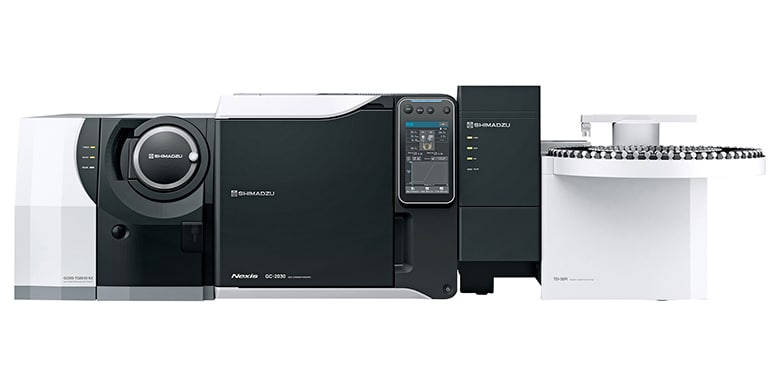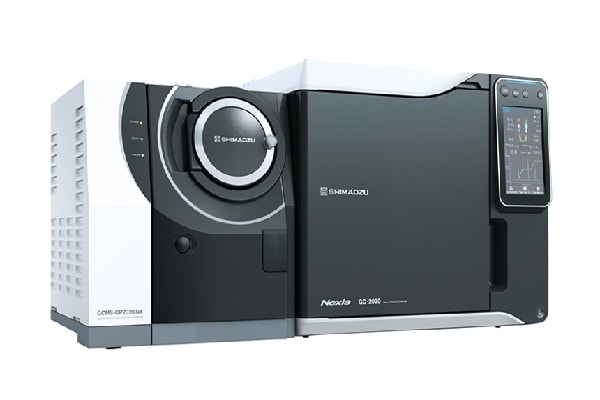
GCMS-QP2020 NX


- Analysis can be performed using nitrogen as the carrier gas, which is readily available compared to helium gas. - Thermal desorption GC-MS facilitates high throughput VOC analysis because it does not require solvent extraction. - Analysis efficiency is heightened by an automatic internal standard addition function and a retrapping function of sample.
The amount of toxic volatile organic compounds (VOC) in the air is one index of the extent of air pollution and is used for environmental monitoring in factories, urban areas, and indoor environments. VOCs can be measured efficiently using TD- GC/MS, which does not require solvent extraction. Helium is commonly used as the carrier gas for GC/MS analysis, but in recent years there have been supply problems. If this carrier gas cannot be obtained, the analysis itself must stop. In this article, analysis was performed using nitrogen rather than helium as the carrier gas. Nitrogen gas can be less sensitive than helium gas, but it is inexpensive and readily available. An analysis was performed of VOCs typically analyzed in voluntary assessments of vehicle interiors and vehicle interior materials, using thermal desorption GC/MS with nitrogen as the carrier gas. The calibration curve, repeatability and efficiency of retrapping were also tested.
May 16, 2022 GMT