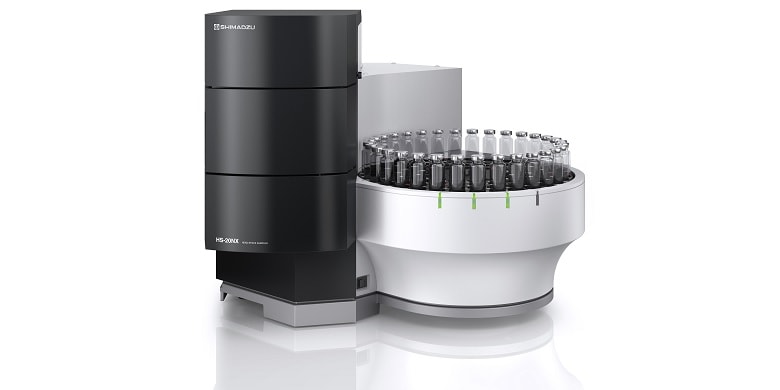
HS-20 NX series


- Good separation was achieved for tert-butyl alcohol (t-BuOH) and cyclopentyl methyl ether (CPME), both recently recommended for classification as class 2 solvents in ICH Q3C (R8). - HS-GC/MS can obtain qualitative information about unknown components that are difficult to distinguish by flame ionization detection (FID) analysis. - LabSolutionsTM DB/CS can be used to support data integrity and prevent data falsification and other similar problems.
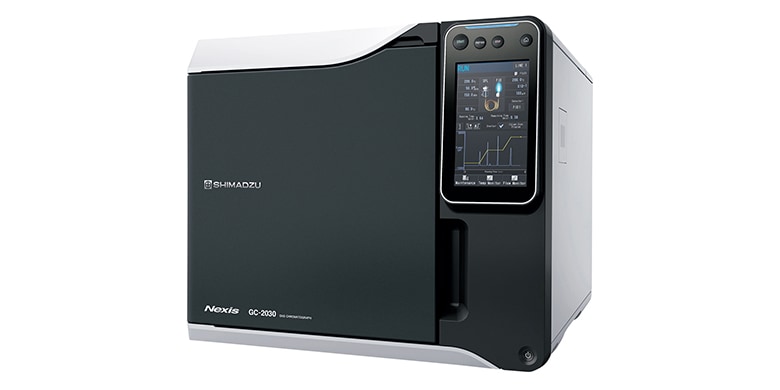
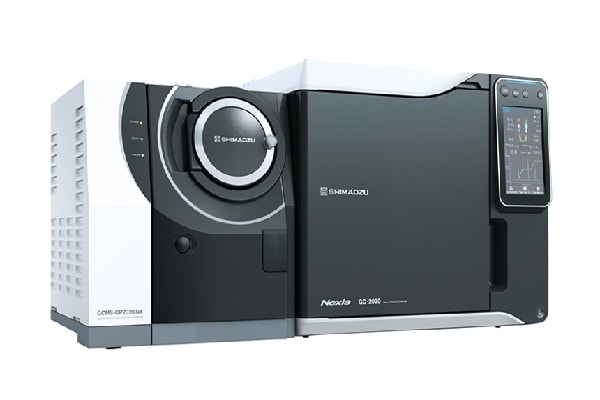
The Japanese Pharmacopoeia 18th Edition (JP18) and United States Pharmacopeia General Chapter <467> Residual Solvents describe tests for residual solvents in pharmaceuticals that are mainly performed by headspace gas chromatography coupled with flame ionization detection (HS-GC-FID). Residual solvents in pharmaceuticals are strictly controlled based on an evaluation of the risk they pose to human health and classified as Class 1, 2, or 3 solvents. Testing for these residual solvents in pharmaceuticals requires highly sensitive analytical methods. Qualitative analysis by GC-FID normally requires the use of standard reference solvents, and accurate solvent identification can be difficult when peaks overlap. However, gas chromatography-mass spectrometry (GC-MS) can also provide qualitative information about sample components based on mass spectra. Unknown peaks or peaks that are difficult to distinguish due to their proximity to other analyte peaks can be identified using mass spectrometry, or mass spectrometry can be used to investigate causes of contamination and other issues. This article presents results from using an HS-20 NX headspace sampler and GCMS-QP2020 NX to analyze water-soluble samples of Class 1 and Class 2 solvents.
October 26, 2022 GMT
Some products may be updated to newer models