
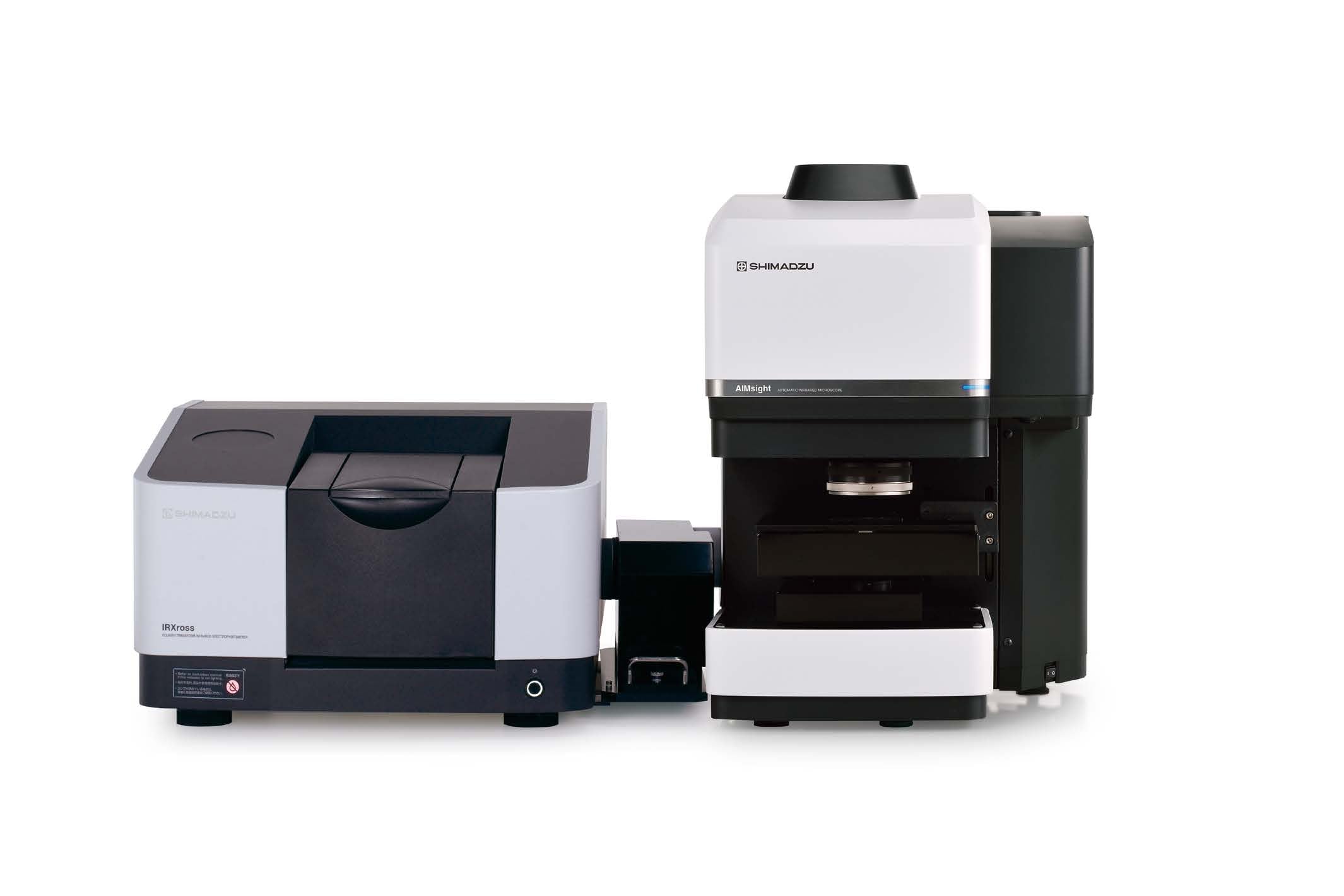
AIMsight™


- Accurate determination of the material of microplastics in the environment is possible. - Enables direct mapping analysis of microplastics collected on filter paper. - The length of target objects in samples can be measured from images acquired by the wide-field camera or 15x reflective objective lens.
Microplastic pollution of rivers and oceans is spreading globally, and the impact on living organisms has also become a serious concern. Active monitoring surveys and research have been carried out in recent years to acquire scientific knowledge regarding the distribution of microplastics in many countries worldwide. When exposed to ultraviolet (UV) light, wind, and rain and subjected to physical friction, plastics released into the environment become embrittled and break down into tiny particles called microplastics. (This type of microplastic is termed "secondary microplastic.") Microplastics are generally evaluated by observing their external appearance, measuring their number and size, and determining their material composition, but among these items, qualitative measurement of the type of plastic material is one of the most important items for identifying the origin of a microplastic. However, because the size of the microplastics being evaluated is becoming smaller by the year, it is necessary to select an appropriate analytical instrument. Because the AIMsight infrared microscope realizes an S/N ratio of 30000 : 1, which is the highest in its class, good spectra can be acquired in a short time even with minute specimens with a size of several 10μm. The AMsolution software used to control AIMsight includes a length measurement function as a standard feature, which makes it possible to measure the length of objects of interest in a sample. Thus, the functions of this system are not limited to qualification of the sample material, but also include acquisition of size information. For analysis of even smaller specimens with sizes on the order of several μm, the AIRsight TM infrared/Raman microscope is an effective tool. For an example of an analysis of microplastics using the AIRsight infrared/Raman microscope, please refer to Application News No. 01-00396. This article introduces an example in which microplastics in the environment were analyzed using the AIMsight infrared microscope.
February 17, 2023 GMT