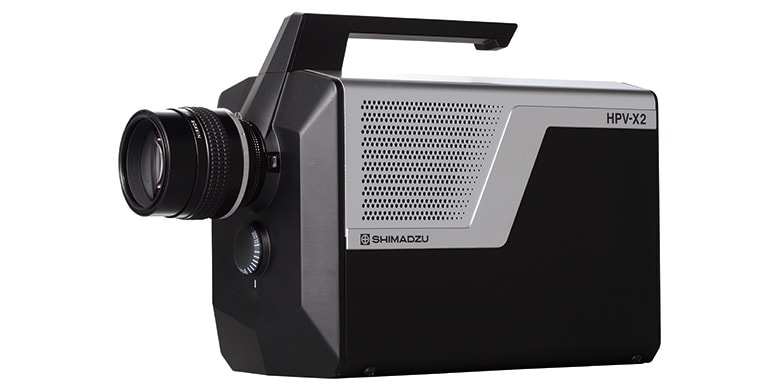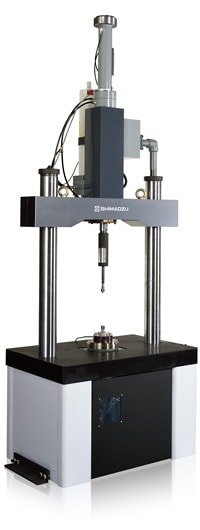
HITS-X Series


- High-speed imaging at a maximum framerate of 10 million fps is possible in high-speed tensile tests. - High-speed tensile tests of resins at a maximum test speed of 20 m/s is possible. - DIC analysis enables observation of the strain distribution of the test piece surface.
Plastic materials are used in various industrial fields and applications from fine gears to automobiles and aircraft because of their thermal characteristics and light weight. In transportation applications, dynamic deformation due to collisions or dropping products is a possibility. Therefore, not only conventional static testing, but also impact testing is necessary to ensure reliability. In particular, it is known that the mechanical properties of polymer materials such as plastics show deformation velocity dependence. Moreover, it is also important to observe the fracture behavior in the test in order to clarify the detailed mechanism of the material. DIC (digital image correlation) analysis can clarify the strain distribution at the material surface, and thus is especially useful for identifying locations where strain concentrations occur in a test. In this experiment, test specimens in which a round hole or notch was machined in the parallel part of an acrylic test piece were prepared, and the strain distribution in a high-speed tensile test was visualized by DIC analysis. Since Shimadzu Corporation has also conducted evaluations and DIC analyses in high-speed tensile tests of plastic materials in the past, the reader may also refer to those reports.
March 28, 2023 GMT