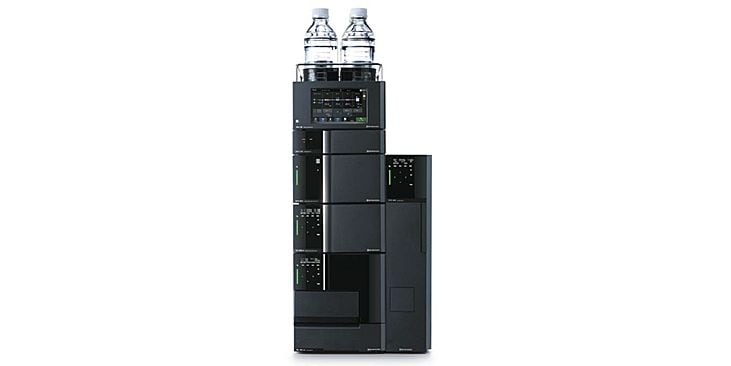
Nexera Series Ultra High Performance Liquid Chromatograph


- The method has been validated and prepared to analyze OPFR metabolites using LC-MS/MS. - The sample preparation includes steps such as enzymatic hydrolysis and simple SPE method. - TBA ion-pairing reagent is used as a mobile phase to increase retention and provide sufficient volatilization for ESI.
Flame retardants activated by an ignition source are substances used to reduce flammability and retard combustion. They include a diverse group of chemicals added to manufactured materials such as plastics, textiles, surface finishes and coatings. Toxicological data suggest that certain organophosphate flame retardants (OPFRs) may be reproductive toxins and may also have carcinogenic and neurotoxic properties. Many OPFR studies have been reported on environmental samples such as water and air, and recently studies have been conducted to dust samples in indoor environments such as houses and offices in addition to food matrices and consumer products. [1] . An exposure assessment conducted by the Consumer Product Safety Commission referred to TDCPP (Tris(1,3- dichloroisopropyl) phosphate) as a suspected carcinogen[2] . However, due to the lack of epidemiological research on human exposure of OPFRs, biological monitoring studies on OPFRs that potentially affect human health are needed. Accordingly, this application news introduces quantitative analysis method for detecting 9 OPFR metabolites in human urine, and some target compounds.
October 18, 2023 GMT
Some products may be updated to newer models