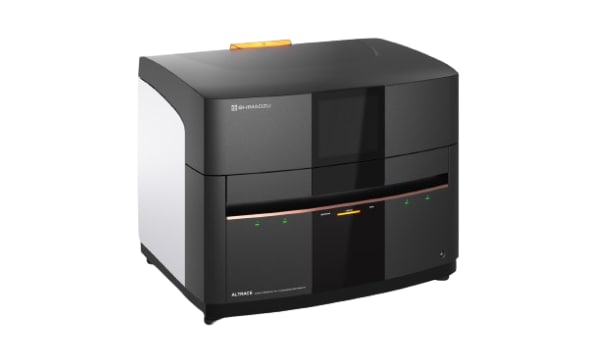
ALTRACE


- In comparison with the conventional technology, sensitivity was improved by high voltage X-ray tube and optimization of the optical design. - Analysis throughput is improved because continuous analysis of a maximum of 48 samples is possible. - Screening for hazardous elements in foods and food additives is possible with only simple sample preparation, such as loading the samples into the sample container.
Control of hazardous heavy metals contained in foods and food additives is required in order to protect human health and safety. Therefore, various domestic laws and regulations (1)-(4) have been established in Japan, including “Standards and criteria for food and food additives, etc.” and “Japan’s Specifications and Standards for Food Additives”. From the viewpoint of sensitivity, the main technique used in analyses of toxic heavy metals is atomic absorption spectrophotometry. However, as disadvantages of this method, powder and solid samples must be dissolved in an acid such as nitric acid or hydrochloric acid, and advanced technology and know-how are required in the actual analysis. In contrast, fluorescent X-ray spectroscopy offers excellent convenience because analysis is possible as-is, without dissolving the specimens. Shimadzu’s new product, the ALTRACE, energy dispersive X-ray fluorescence spectrometer , makes it possible to analyze toxic heavy metals with high sensitivity thanks to the increased output of the X-ray tube and optimization of the optical design. As an additional advantage, continuous analysis of a maximum of 48 samples is possible, contributing to improved analysis throughput. This Application News article introduces the following: 1. Analysis of cadmium (Cd) in rice 2. Analysis of arsenic (As) and lead (Pb) in food additives
March 18, 2025 GMT