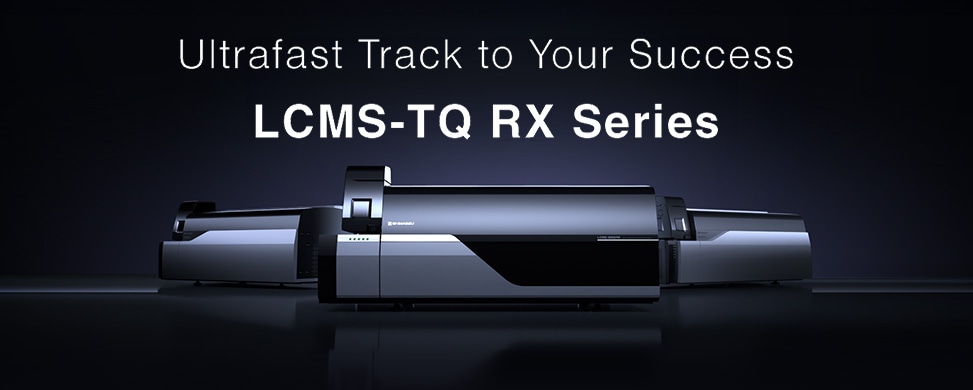
LCMS-TQ RX Series Triple Quadrupole LC-MS/MS


- A single Shimadzu LCMS-8060RX triple quadrupole mass spectrometer can successfully quantitate both PFAS and cyanotoxins in water with automated method switching. - With only a five-minute rinsing time between methods, the system maintains high accuracy and sensitivity over an extended run time, even with multiple injections and method changes. - This single system approach allows laboratories to respond swiftly to emergencies, like Harmful Algae Blooms, while minimizing disruption to routine PFAS testing and eliminating the need to invest in multiple instruments.
Per- and Polyfluoroalkyl Substances (PFAS) are a group of synthetic chemicals extensively used in consumer products (e.g., food packaging materials and non-stick coatings) and industrial applications such as firefighting foams and polymer/plastics manufacturing. Their remarkable properties, including high stability and resistance to degradation, coupled with widespread usage, have led to their persistent accumulation in the environment. Consequently, regulatory and governmental organizations, including the US Environmental Protection Agency (EPA) and the European Chemicals Agency (ECHA), are working to restrict their presence in the environment. In the United States, EPA Method 537.1 is one of the approved methods by EPA for the analysis of PFAS in drinking water. It targets 18 compounds, utilizing solid-phase extraction (SPE) followed by liquid chromatography-tandem mass spectrometry (LC-MS/MS) for detection at low ng/L concentrations. EPA 533 is the only other method currently approved by EPA for PFAS in drinking water; it follows a similar workflow as EPA 537.1 but targets a larger list of 25 PFAS compounds. PFAS is not the sole concern; there are additional contaminants in drinking water that can also pose significant health risks. Cyanobacteria, also referred to as blue-green algae, are photosynthetic organisms that thrive in both freshwater and marine ecosystems. The frequency and occurrence of Harmful Algae Blooms (HABs) have risen substantially over the years, primarily due to human-induced inputs of phosphorus and nitrogen into aquatic systems, fueling the global increase in harmful algal blooms. These organisms can significantly affect water quality by producing cyanotoxins such as cylindrospermopsin, anatoxin-a and microcystins. Exposure to these cyanotoxins can cause a range of adverse health effects in humans and animals, from mild skin irritations to severe illnesses. The US EPA has established Methods 544 and 545 as analytical protocols for detecting cyanotoxins in drinking water and freshwater. EPA Method 544 is designed to detect microcystins and nodularin, while EPA Method 545 targets cylindrospermopsin and anatoxin-a. Both methods employ liquid chromatography-tandem mass spectrometry (LC-MS/MS) for precise analysis. Ideally, separate instruments should be dedicated to analyzing PFAS and cyanotoxins to minimize the risk of contamination and interference. However, with the growing demand for water testing and rapid turn-around-times during emergencies that may alter routine testing, a single system capable of handling multiple methods offers a more cost-effective solution. This application demonstrates the accurate and robust quantification of PFAS and cyanotoxins, performed in accordance with EPA Methods 537.1, 545, and 544, using a single Shimadzu LCMS-8060RX triple quadrupole mass spectrometer with automatic method.
May 14, 2025 GMT
Some products may be updated to newer models